
Exploration: Poetic Language Between Humans and AI
Role: Speculative Design · Design Research · Interactive Exhibition
Team: Solo project
Timeline: 2 months (2018)
Studio: Carnegie Mellon University, Environments Design Studio
Recognition: Exhibited at the Future Perfect Conference, hosted by the Data & Society Research Institute, New York, 2018

Most of the ways we talk to AI are built on logic and precision. But human language isn't like that — it's full of metaphor, context, and feeling.
Poetic Language between Humans and AI is a speculative design exhibit exploring how metaphors, phrases, and poems can be used to communicate with AI, fostering deeper understanding of intangible emotions.
As AI increasingly integrates into our daily lives, designers must critically examine and provoke discussions about the complex interactions between human and nonhuman intelligences, addressing biases and hidden power structures to thoughtfully shape future environments. In this studio, the challenge was to interpret the topic: Where are the humans in AI?
The Challenge
explore the
opportunity
I started by conducting exploratory research on social interaction topics regarding humans and artificial intelligence. I categorized insights into four themes:
Poetic/Lyricism: Does AI understand metaphors or symbols?
Social Status/Hierarchy: Often, AI is called an assistant. Does the AI world have social status or hierarchy?
Manners/Traditions: As younger generations spend more time with machines and AI, they might lose contact with human intelligence, culture, and roots. How might this affect the way we value daily manners and etiquette?
Emotional & Intelligent Quotient: While humans do not value EQ and IQ equally, how does AI perceive the importance of each?

Meanwhile, I joined the Humans and AI discussions on the Carnegie Mellon University campus, focusing on ethics, machine learning, data, and interactions. Below are the speakers' insights that influenced my design:
Humans have qualities like multi-dimensional trust, emotional depth, and the ability to attribute mental states—beliefs, intents, desires, feelings, knowledge, etc.—to oneself and others, and to understand that others' mental states are different from one's own (Theory of Mind).
Technology should not replace us when it cannot be explained.
There is a difference between behavioral data on human actions and mind (e.g., using facial recognition to define mood) versus actual data.
Discussion

Data and Society - Madeleine Clare Elish

Carnegie Mellon University Human-Computer Interaction in the Machine Learning Department - Min Kyung Lee

Former Design Manager at Twitter, current Independent Design Consultant - Cennydd

Carnegie Mellon Universtiy — K & L Gates Conference on Ethics and AI

“Trina, Designing Text Technologies for Critical Interpretation” - Anne Burdick

Speaker MiMi Onuoha — an artist and researcher using data and code to explore new forms of storytelling, social critique, and interaction
Research
Synthesis

Venn diagram

Pros and Cons
Design
Principles

Through my research, I found that the biggest difference between humans and AI wasn't just background knowledge, it was context: the language we use, the metaphors we reach for, the stories we tell. I decided to dive into AI topics related to metaphors/lyricism and Emotional Intelligence. Communicating intangible emotions is challenging between people — even more so with AI. What if humans could communicate with AI in human terms, using metaphors, poems, and phrases to understand one another contextually?
Scoping The Problem
I looked at different ways humans access and express meaning beyond literal, mathematical language, exploring what an expressive, symbolic exchange with a different kind of intelligence could look like:
Rorschach Test: Psychologists use this test to examine a person's personality characteristics and emotional functioning. "By asking the person to tell you what they see in the inkblot, they are telling you about themselves, and how they project meaning onto the real world," says psychologist Mike Drayton for BBC. It's a method built entirely on open-ended expression to reveal what someone thinks internally.
Human Languages: Human languages create associations for understanding context through the composition of compound characters — proof that even everyday language is already built from metaphor.
Arrival: This sci-fi drama directed by Denis Villeneuve explores language, communication, intention, and time. In the movie, humans create an entire alphabet system by studying the communication patterns of aliens.
Expressive Precedents

Rorschach test

Sited from Teaching Culture through Language: Exploring Metaphor and Metonymy in Chinese Characters by Hu, Ying-Hsueh


Chinese Compound words

German Compound words

A scene from the film, Arrival (2016)

Aliens alphabet system and communicate patterns. - the film, Arrival (2016)
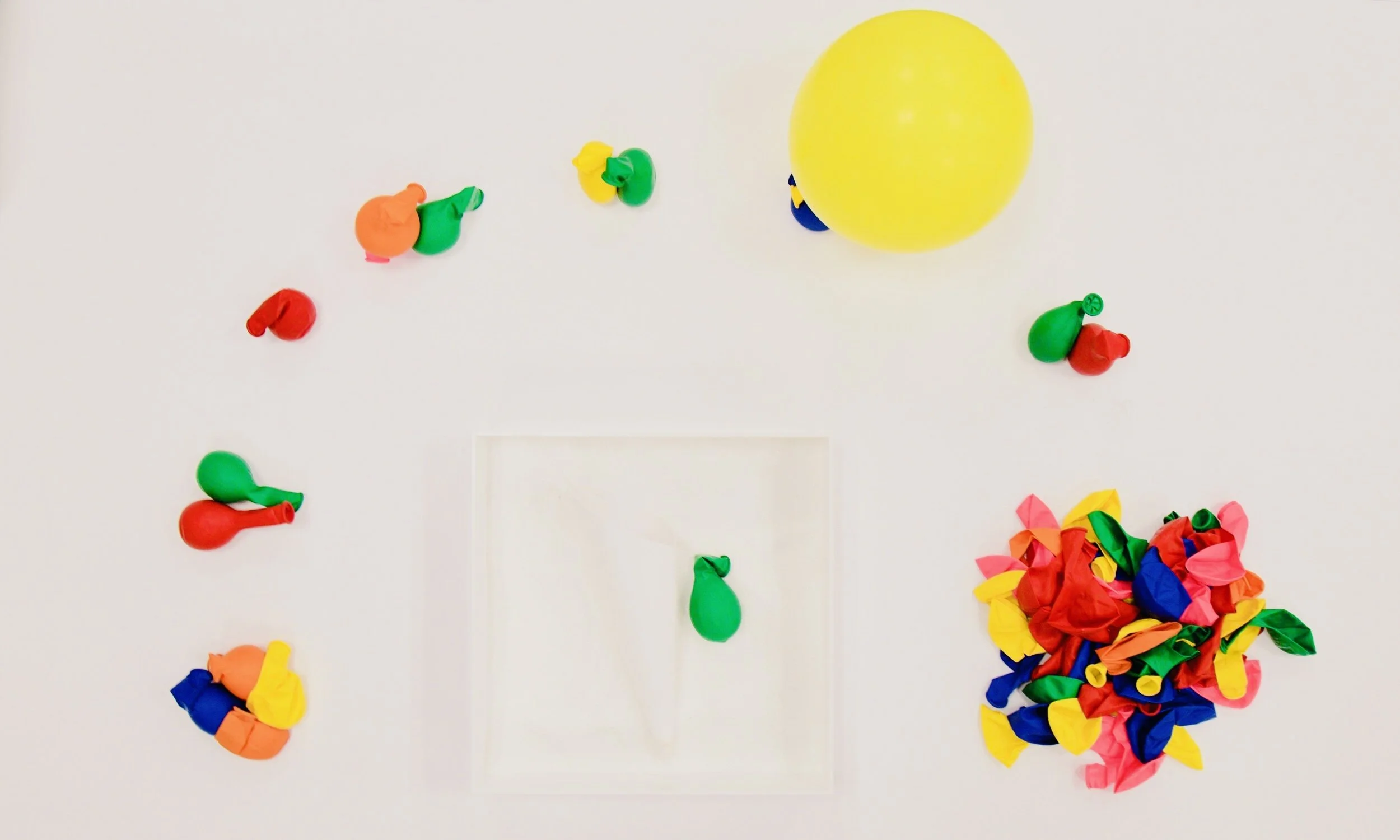
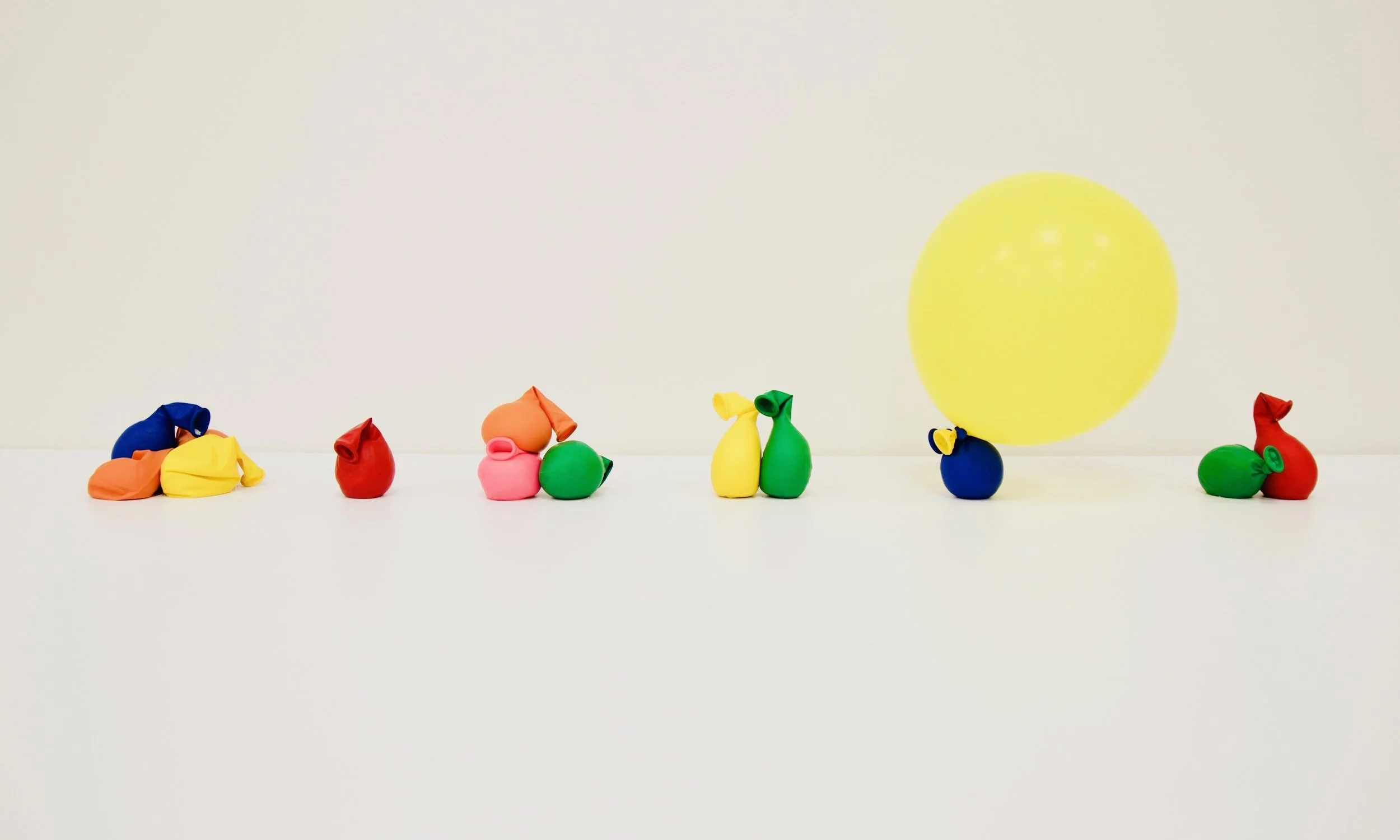
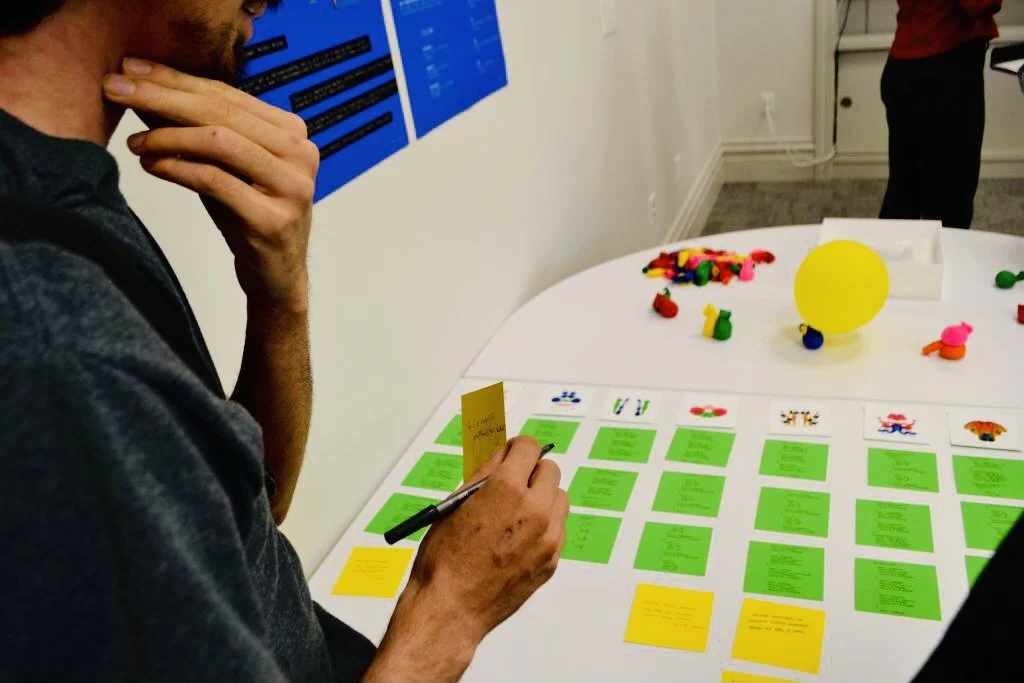
I created two interactive speculative design experiences that invite users to explore how human language is fundamentally built with metaphors that tell stories and provide context, as well as how we express and communicate intangible feelings. I encourage visitors to think about new ways for AI to communicate more humanely.
the result

Introduction of my research and speculative designs

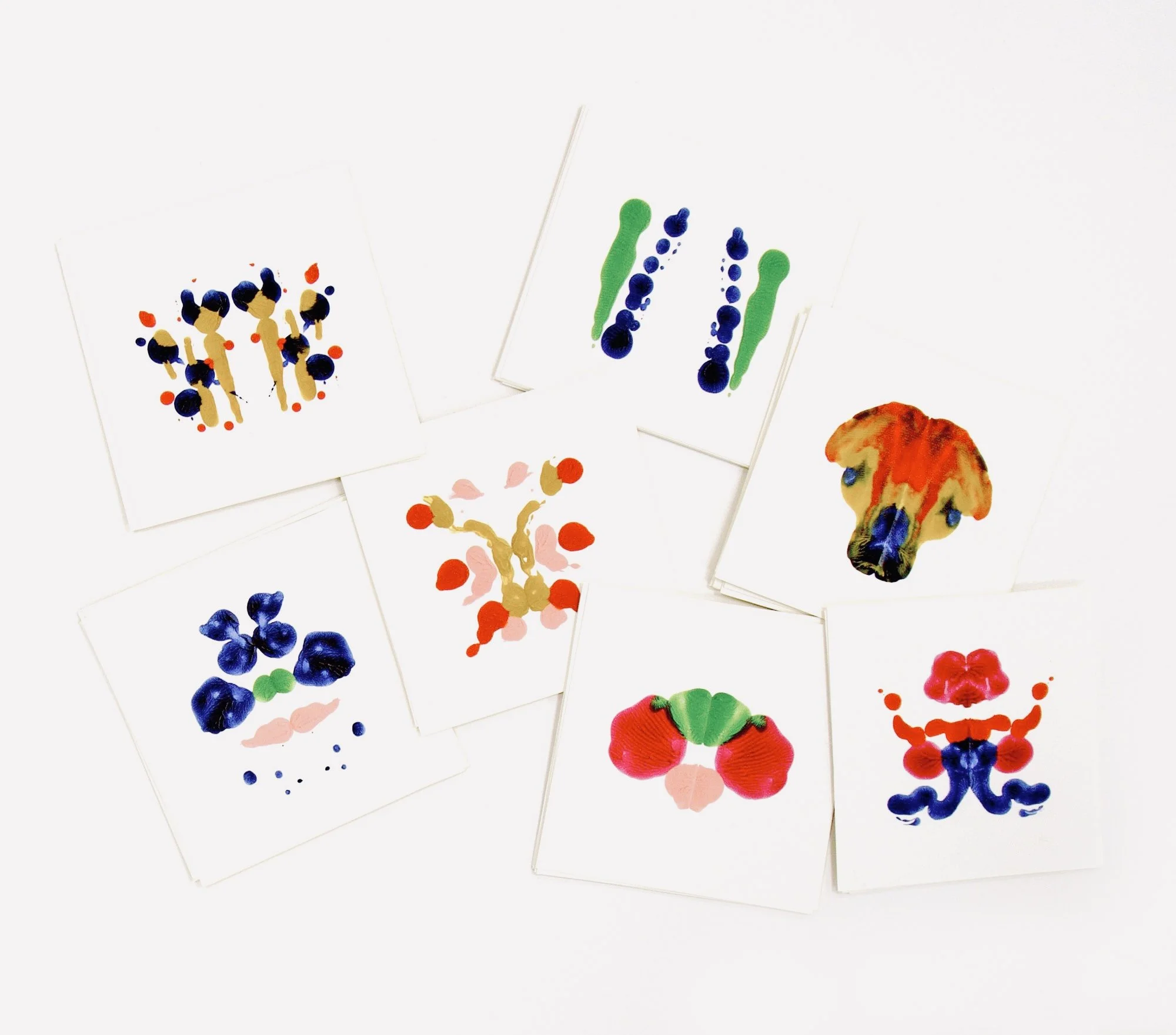
I created the inkblots

Image Reader’s interpretations of the inkblots


Visitors expression of the inkblots