

Philips: green Kitchen Innovation
Role: User Journey Mapping · Ecosystem Research · Experience Design
Timeline: 2.5 Months
Team: Industrial Designer, Engineers
Client: Philips
Impact: Presented a viable product innovation architecture to the Philips Design Director, proving how they could enter a new sustainable market by leveraging their existing manufacturing lines.
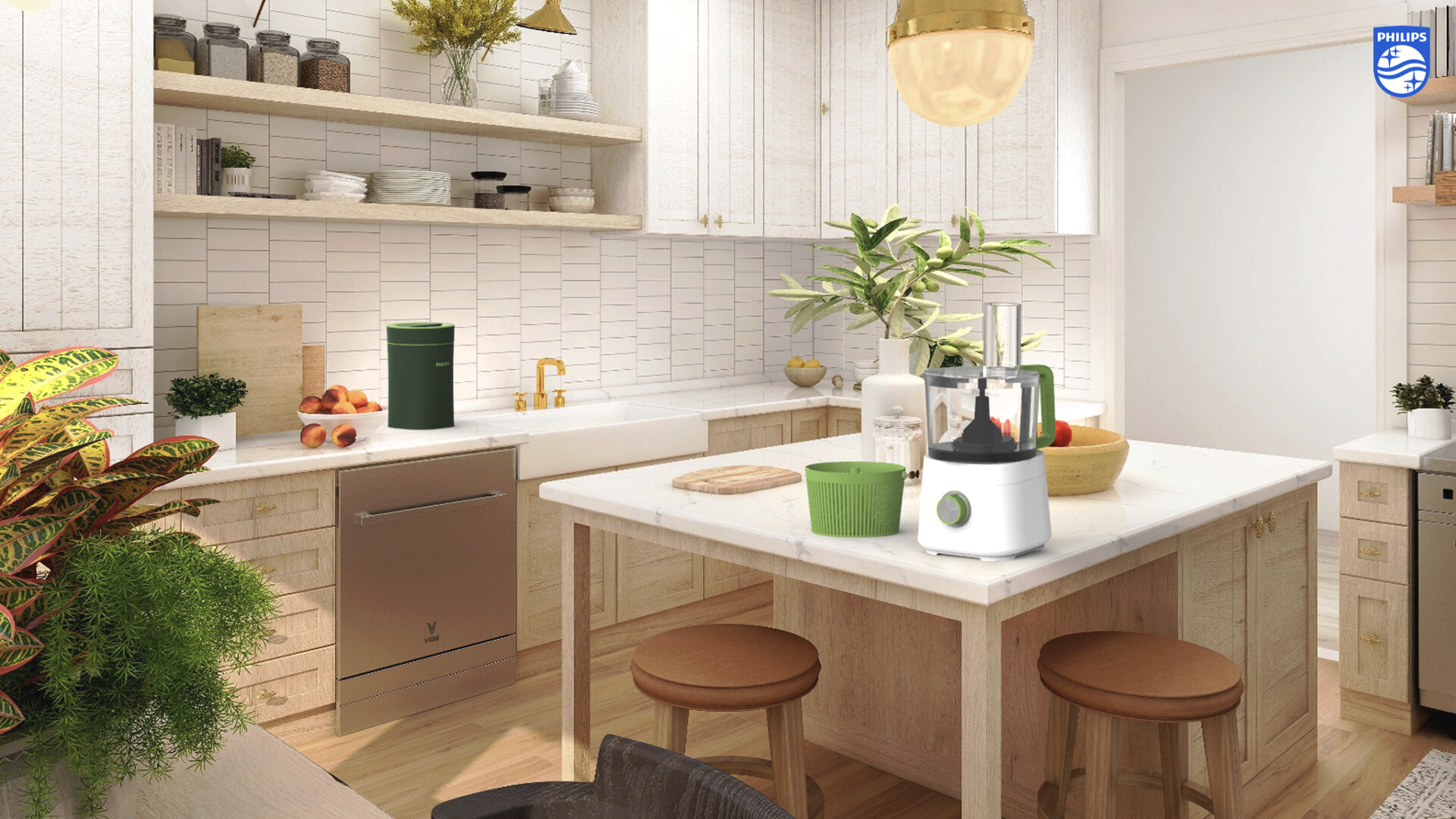
Philips wants to lead in multifunctional kitchen tools—solutions that stretch to cover more of the food-at-home journey without the usual trade-off between versatility and performance.
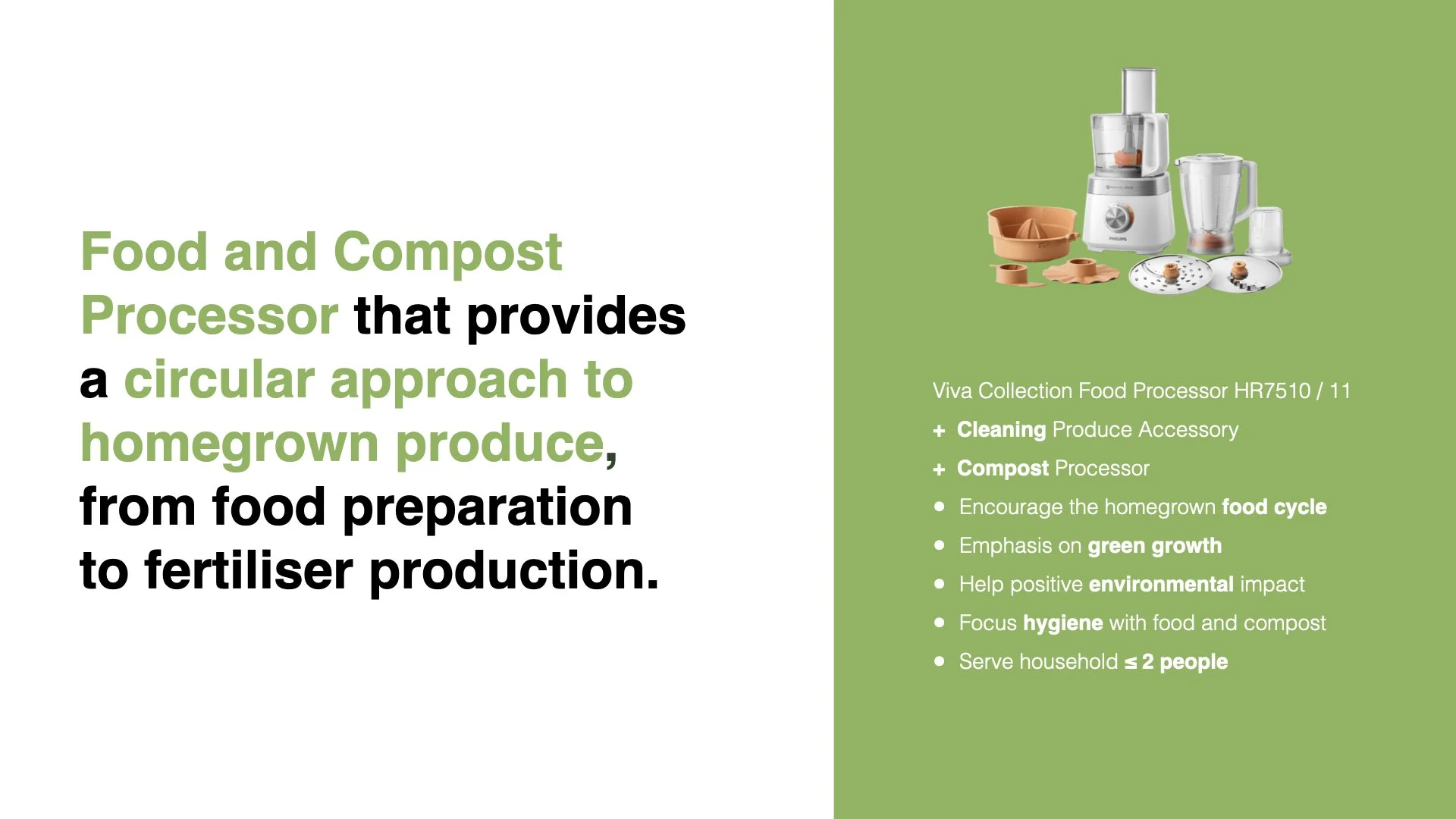
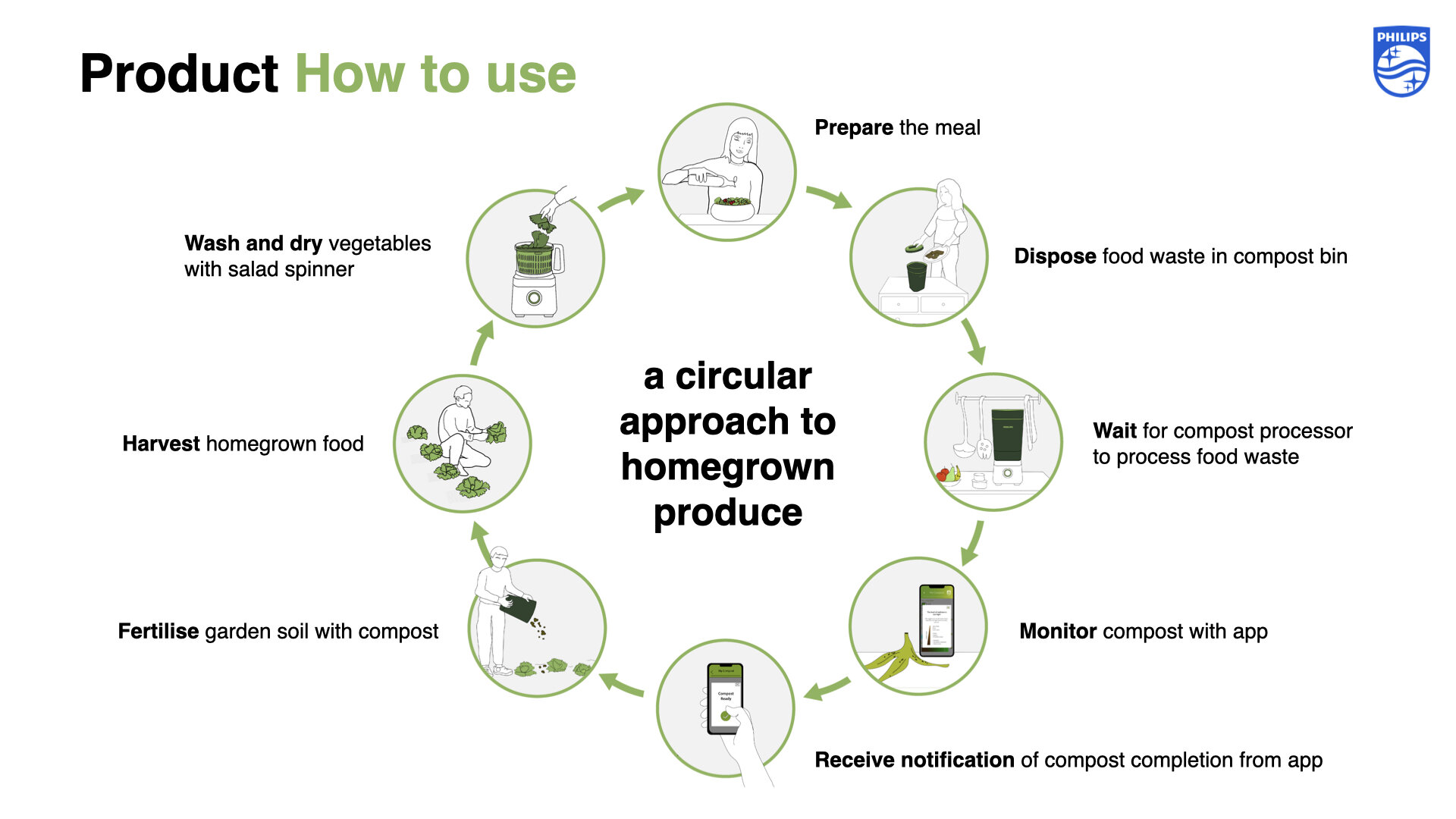
As the experience designer, I mapped the full home-gardening and food-preparation journey to find where the biggest opportunity lived. The result was a circular food and compost processor that builds on Philips' existing Viva Collection line—closing the homegrown produce loop from food prep to fertilizer production.
brief meeting
the opportunity
TARGET AUDIENCE

Live brief session with the Philips design director
We started broad, mapping how people prepare food, store kitchen tools, and consume food across the home journey. Three distinct themes kept surfacing: food waste, homegrown produce, and plant-based diets. Our market and user research revealed three critical shifts:
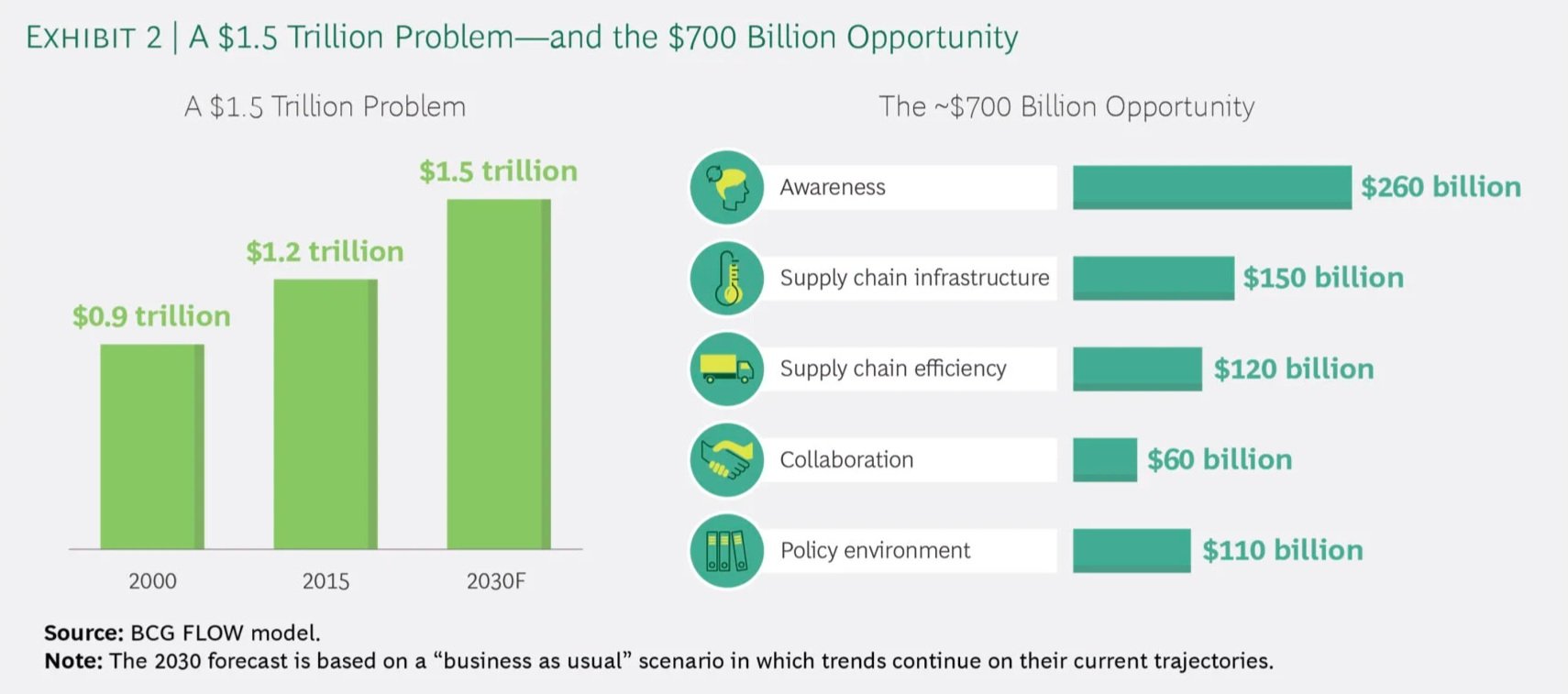
The Scale of Food Waste: Global food waste results in $1.5 trillion in losses and 1.3 billion tons of edible food wasted annually.
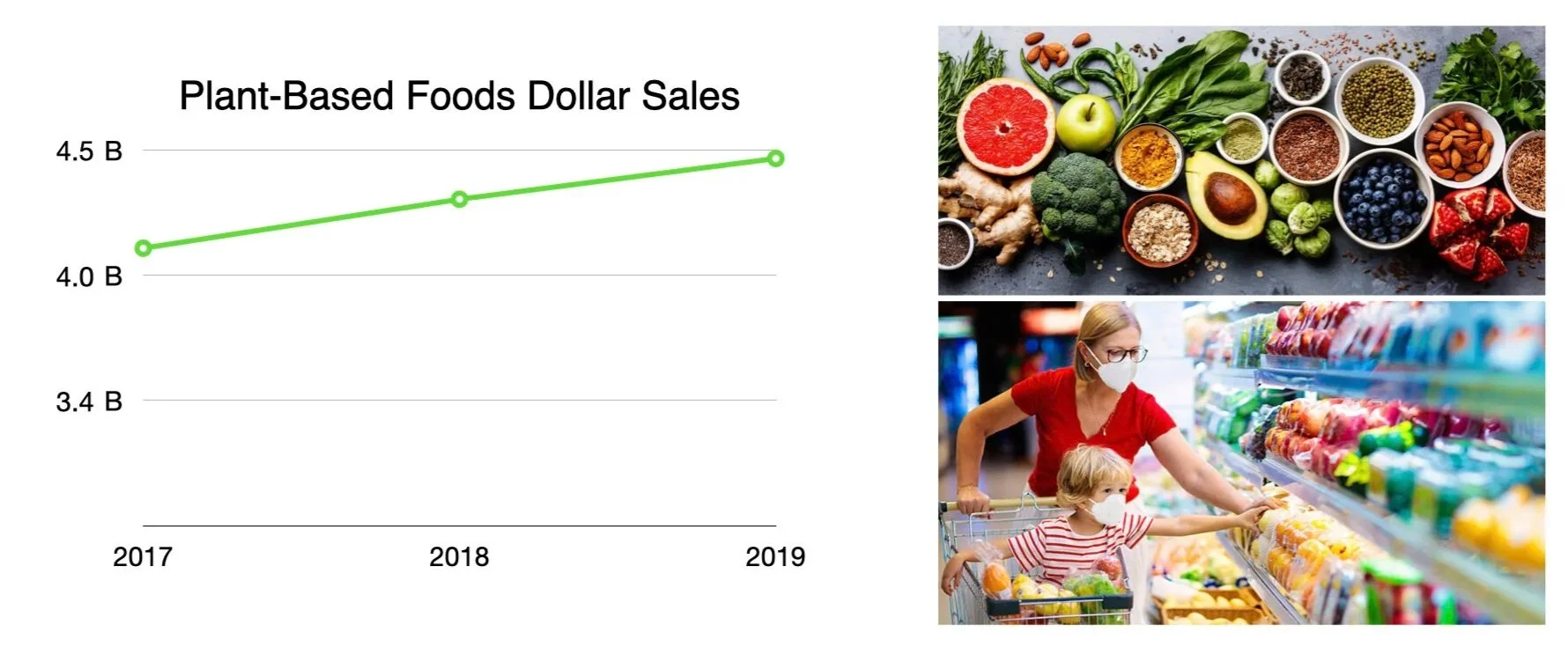
The Plant-Based Surge: Plant-based food sales grew 54% over a three-year period.
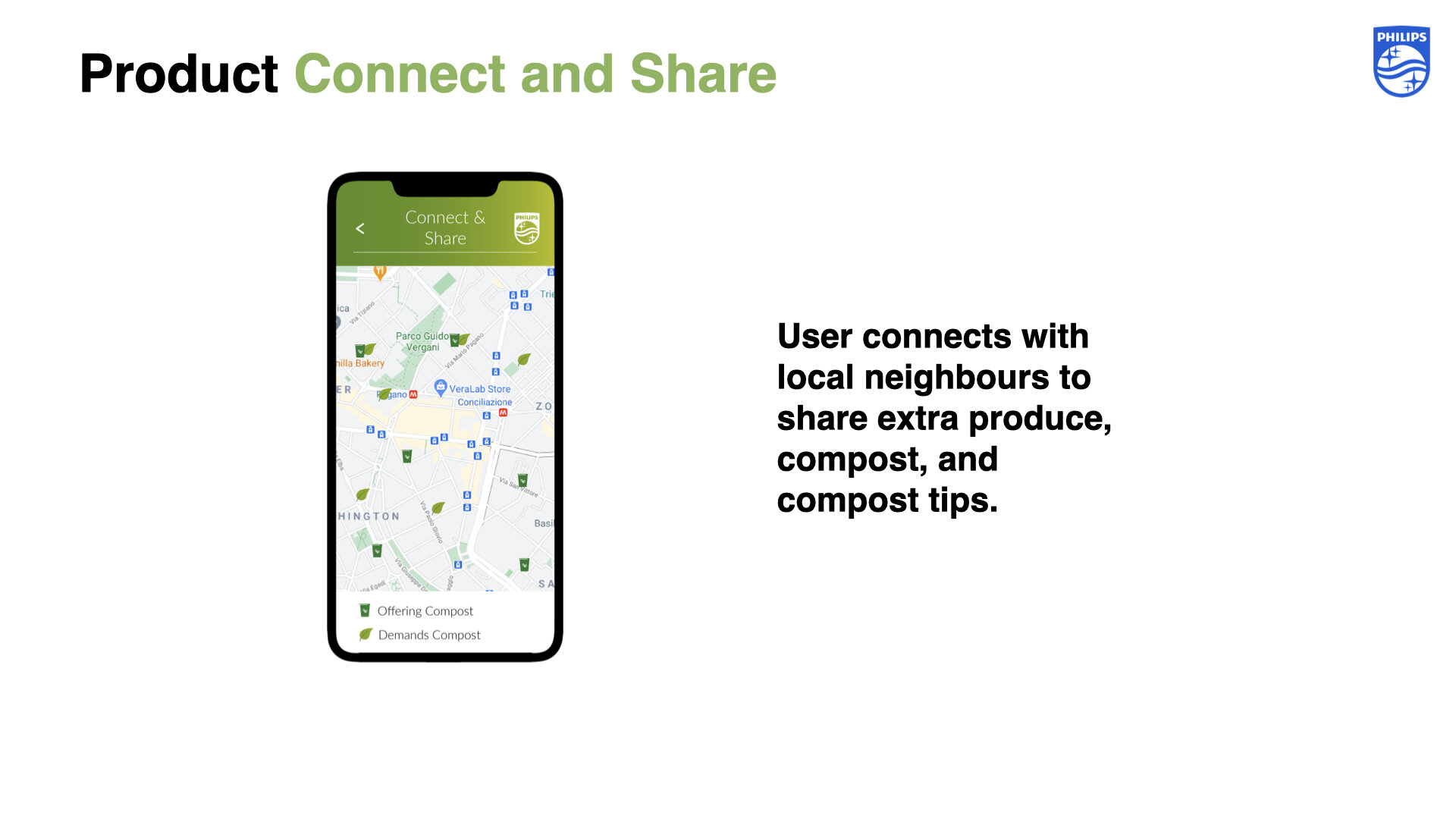
The Conscious Consumer: Consumers are increasingly driven to know exactly where their food comes from and how its production impacts the environment.
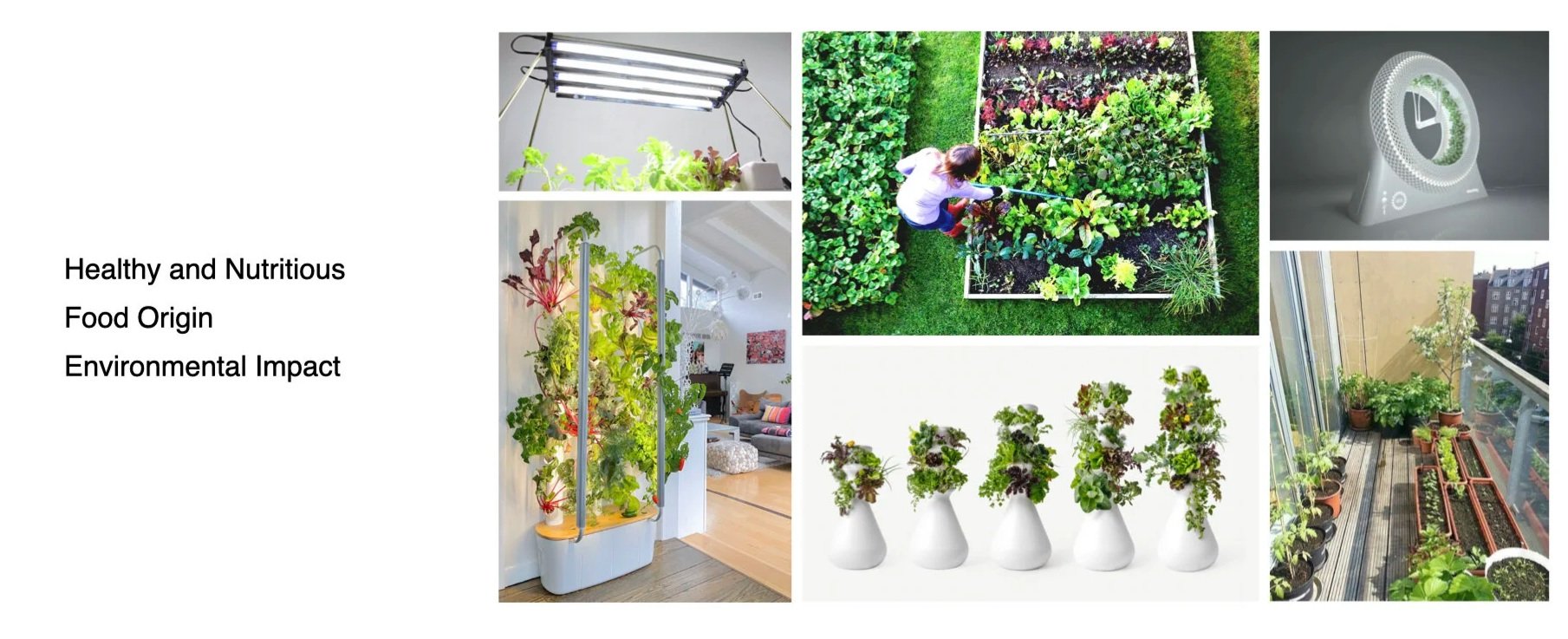
We focused on conscious urban consumers—spanning multi-generation segments from parents to Gen-Z—who prioritize physical well-being, environmental impact, and localized food origin.

defining value
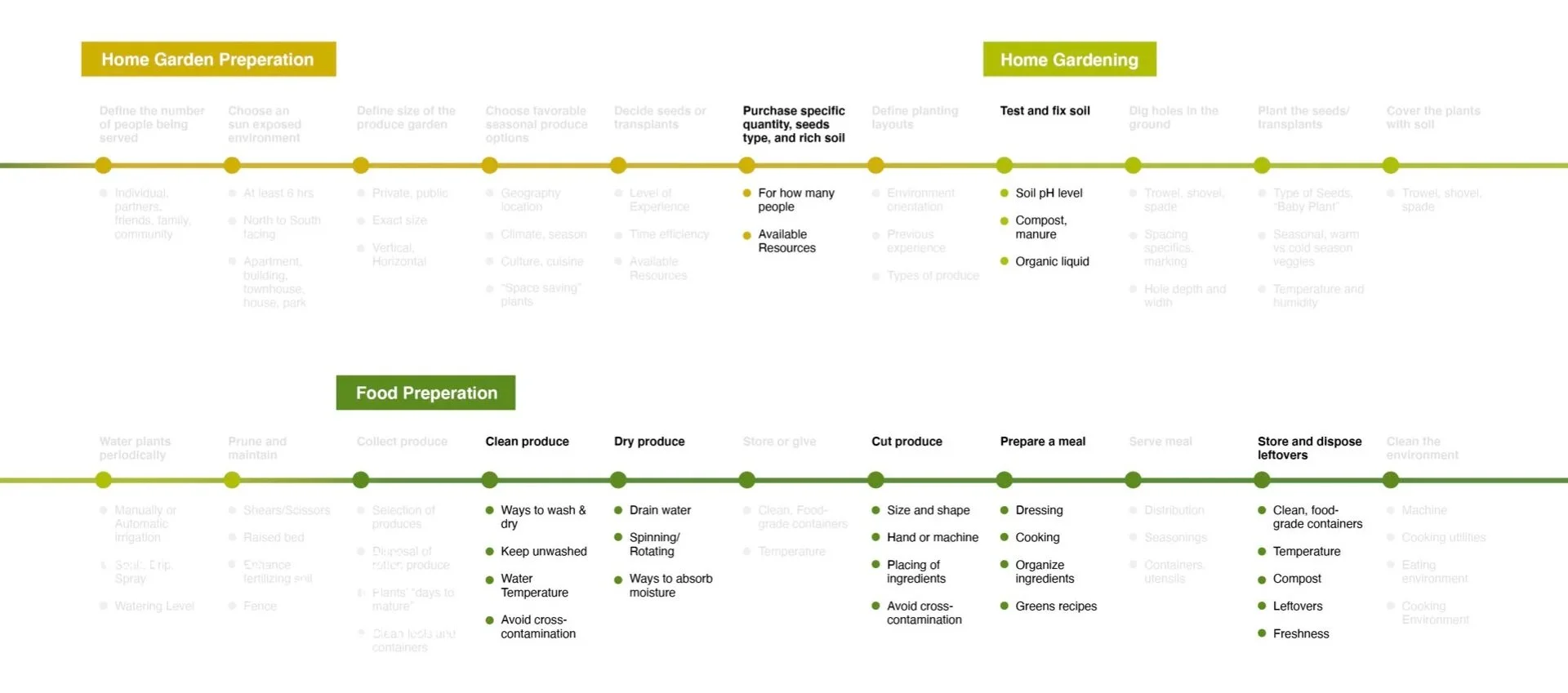
To locate where a product intervention would deliver the highest value, I synthesized our research into an end-to-end home gardening journey map—tracking user friction from initial garden preparation through harvest and food preparation. This yielded our core strategic insights:
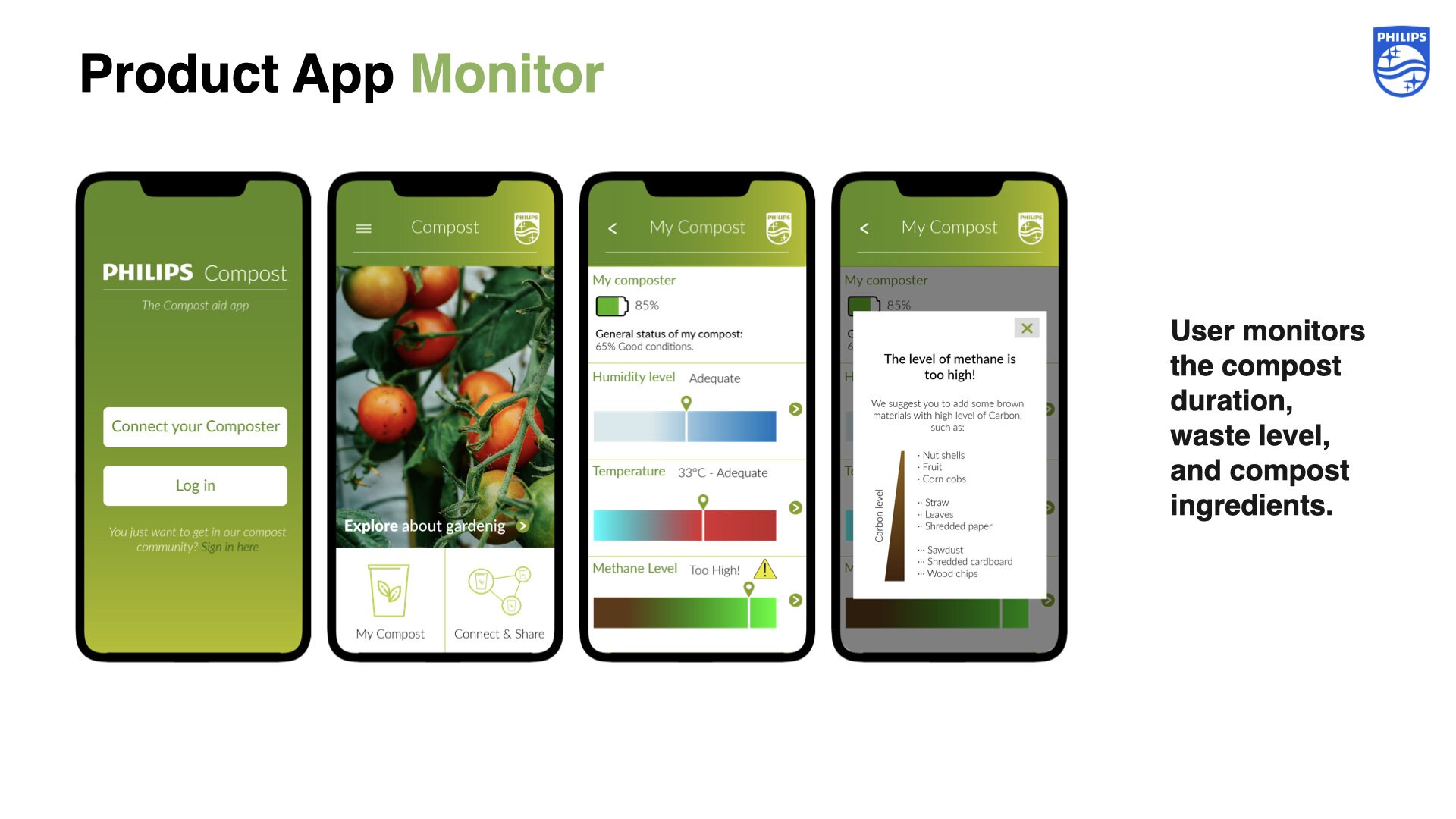
The Connected Thread: Food waste emerged as the single missing link connecting the kitchen back to the garden.
Targeting High Friction: We isolated the highlighted gaps required to complete a truly circular homegrown produce lifecycle.
The Opportunity: Composting became our ultimate product intervention—allowing us to repurpose organic kitchen waste directly into rich fertilizer for the next harvest cycle.

MARKET VALIDATION
We narrowed our scope to a single, closed-loop product brief. By anchoring our strategy on the existing Philips motor base, we established our core design principles to maximize circularity while maintaining strict engineering and hygienic standards.
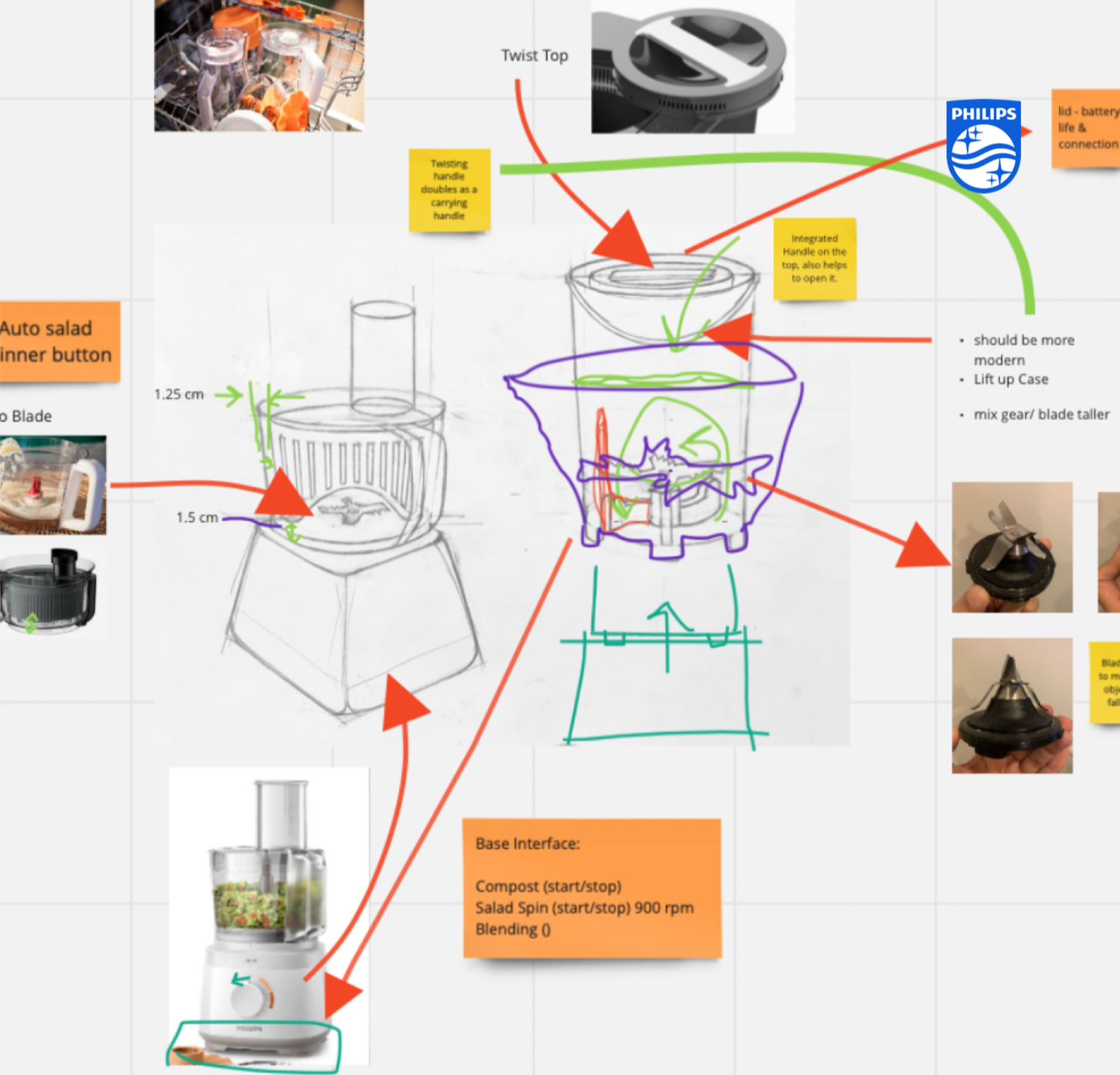
To translate this opportunity into a viable product, our team individually explored initial concepts. I sketched out a foundational food processor and compost bin framework to serve as our cross-functional roadmap. While working alongside engineers to map out and integrate the internal mechanical components, we pressure-tested our mechanical feasibility. We discovered:
Built-on Approach: parts of our technical requirements directly overlapped with the existing Philips Viva Collection Food Processor mechanism.
Business Value: Building our modular ecosystem on top of this established motor base helps reduce corporate innovation costs by utilizing Philips' existing manufacturing lines.
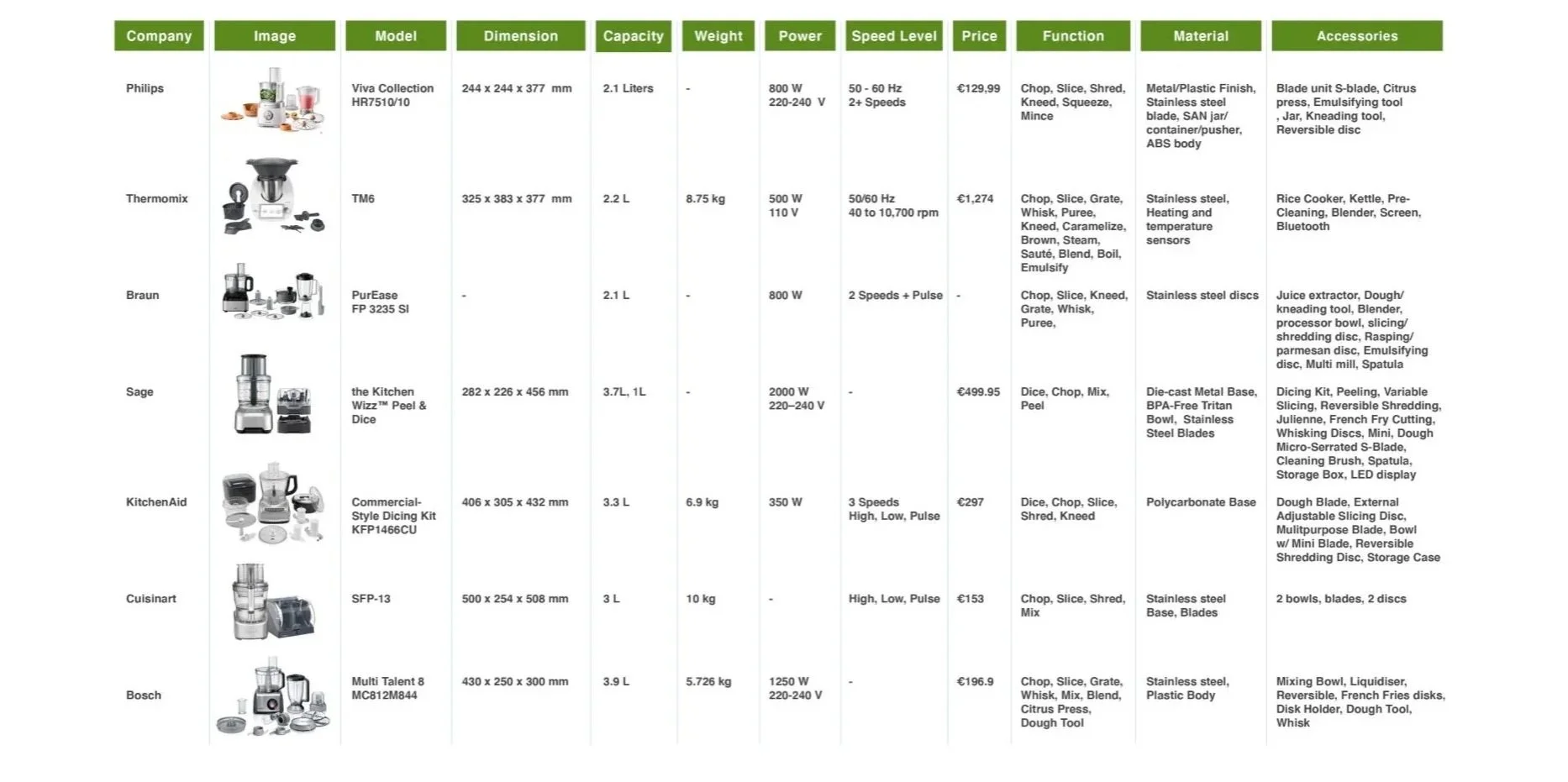
To understand the market and validate our concept's value, I benchmarked existing multifunctional food processors and food compost cyclers—mapping their features, mechanics, and composting methods. Our benchmarking confirmed a white space for this direction:
Zero Direct Competition: No other company had combined food processing and composting into a single, cohesive home product framework.
First-Mover Advantage: This verified a unique opportunity for Philips to pioneer and lead an entirely new kitchen product category.
DESIGN principles
CO-DESIGN & INTEGRATION

Benchmark of food compost cycler
Benchmark of food processor
tHE resultS
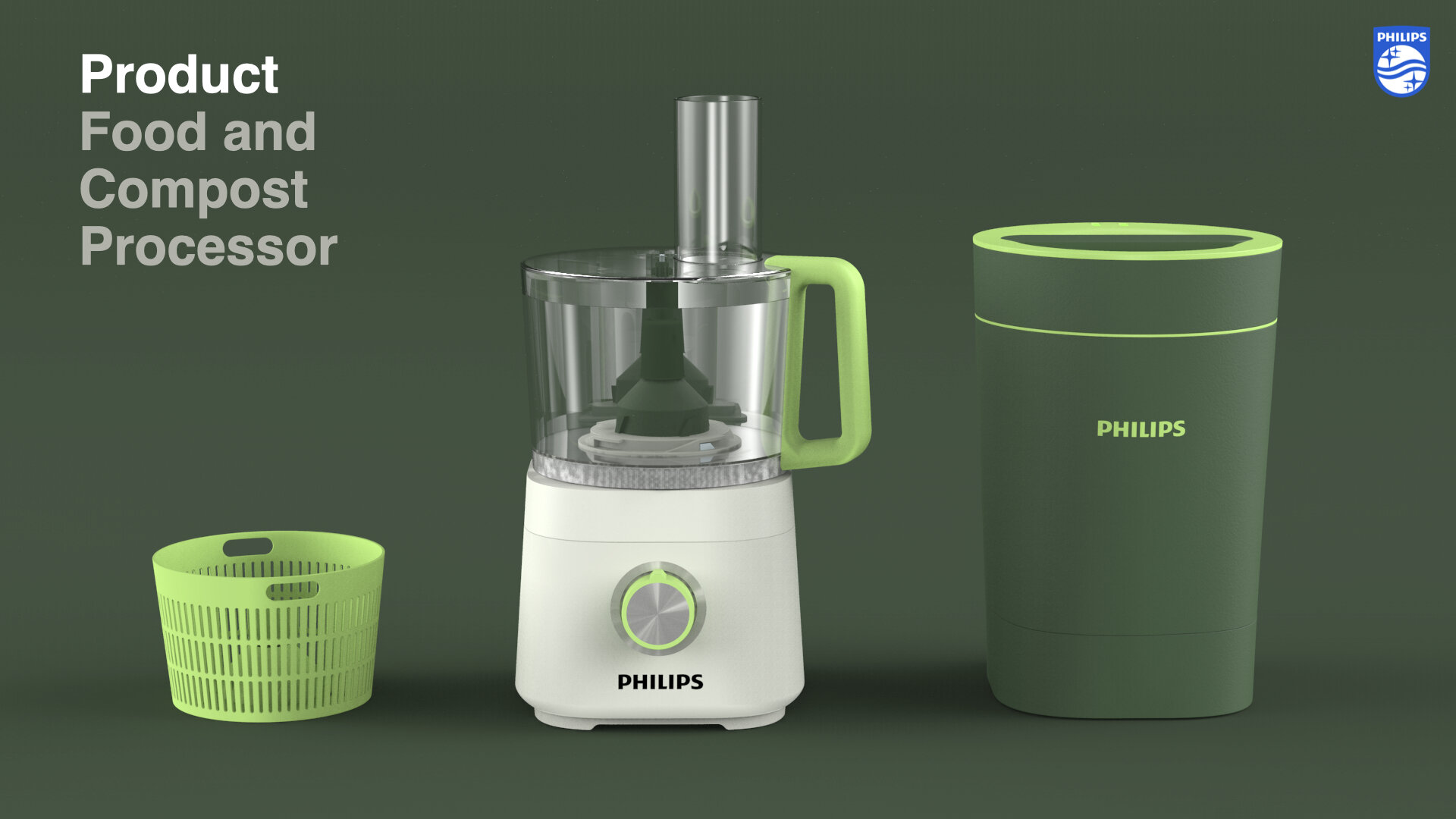
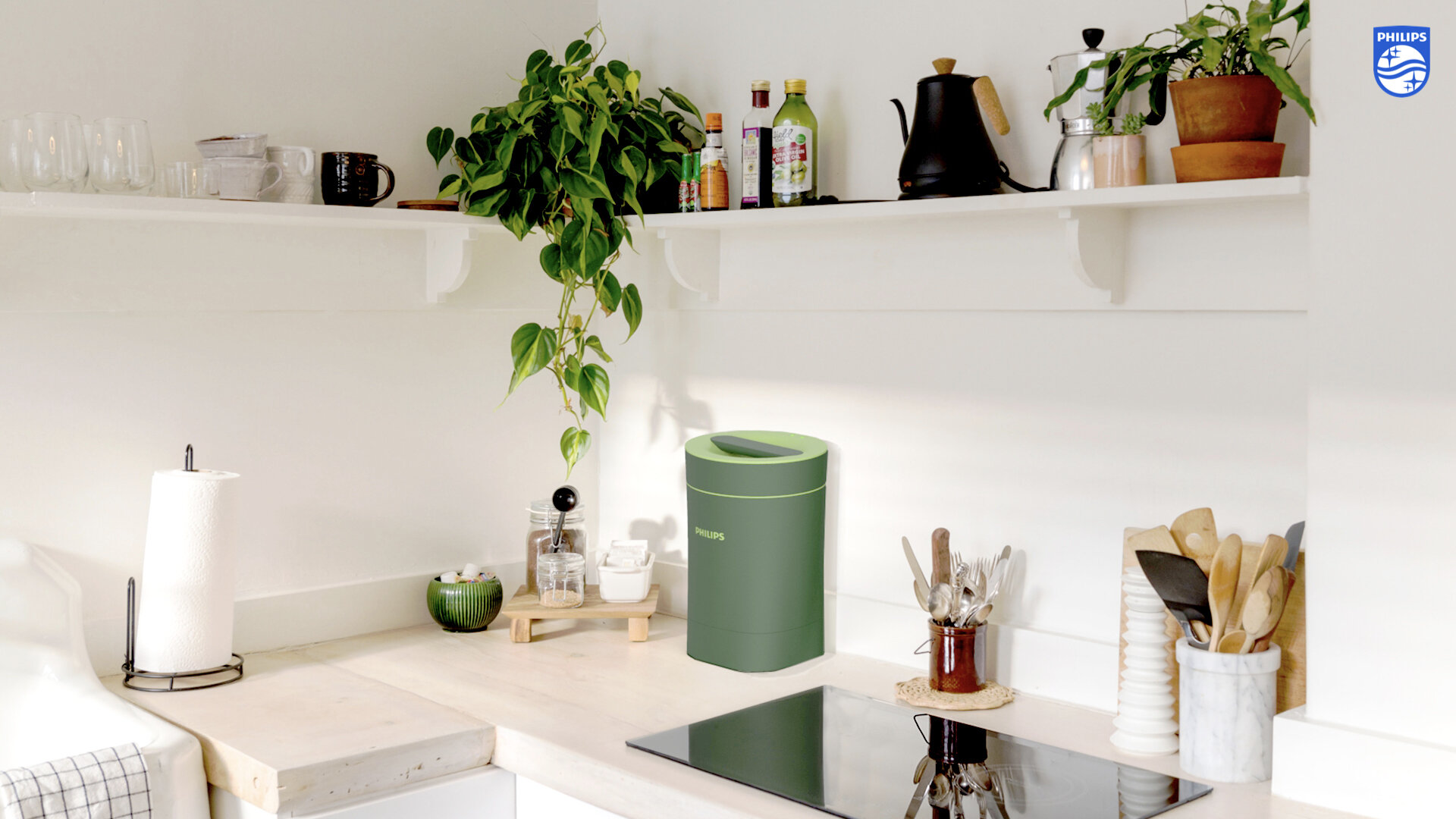
We delivered a new, multifunctional ecosystem for the Philips Viva Collection that successfully closes the loop on the homegrown food cycle. The final product drives impact across three key pillars:
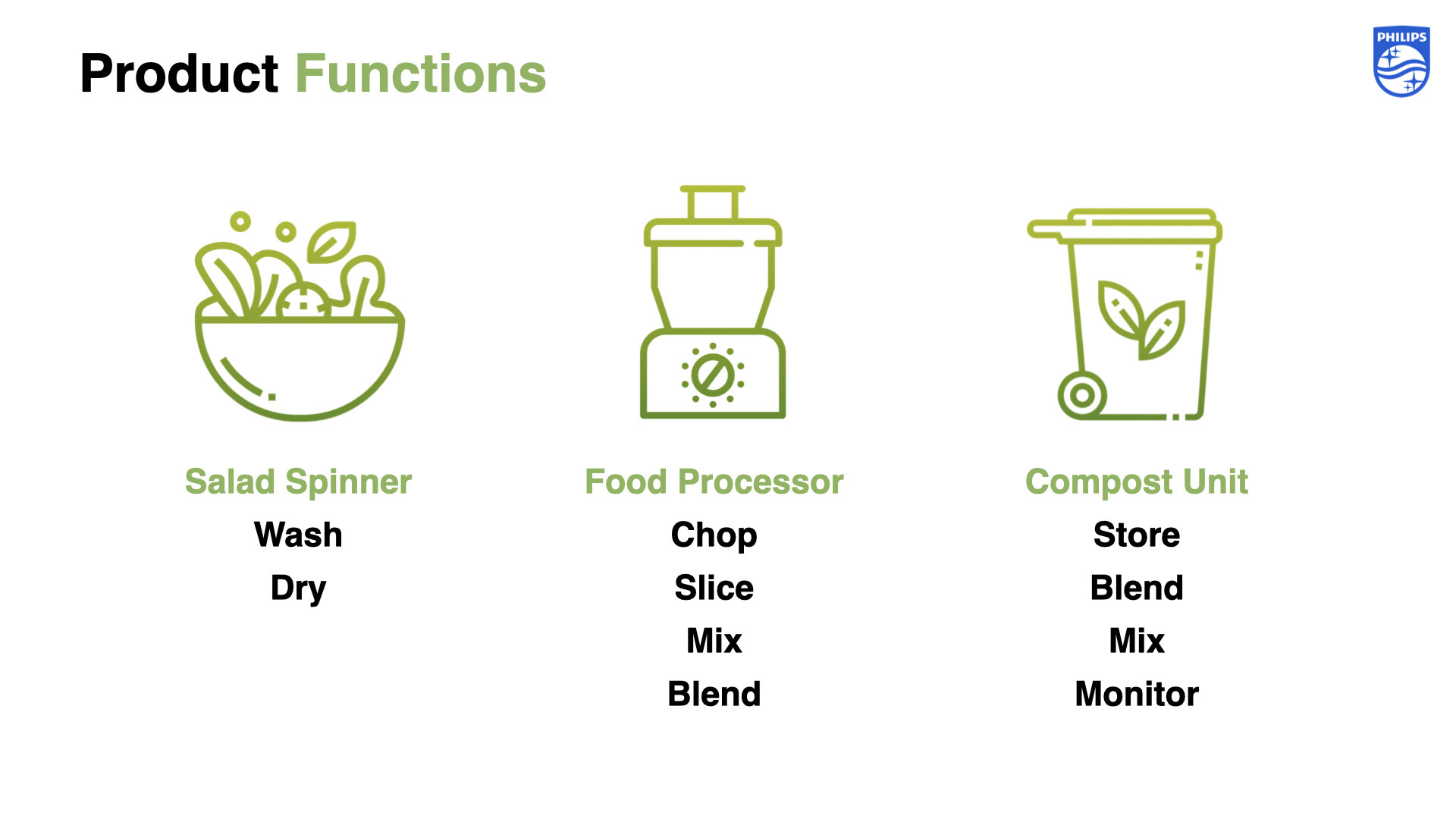
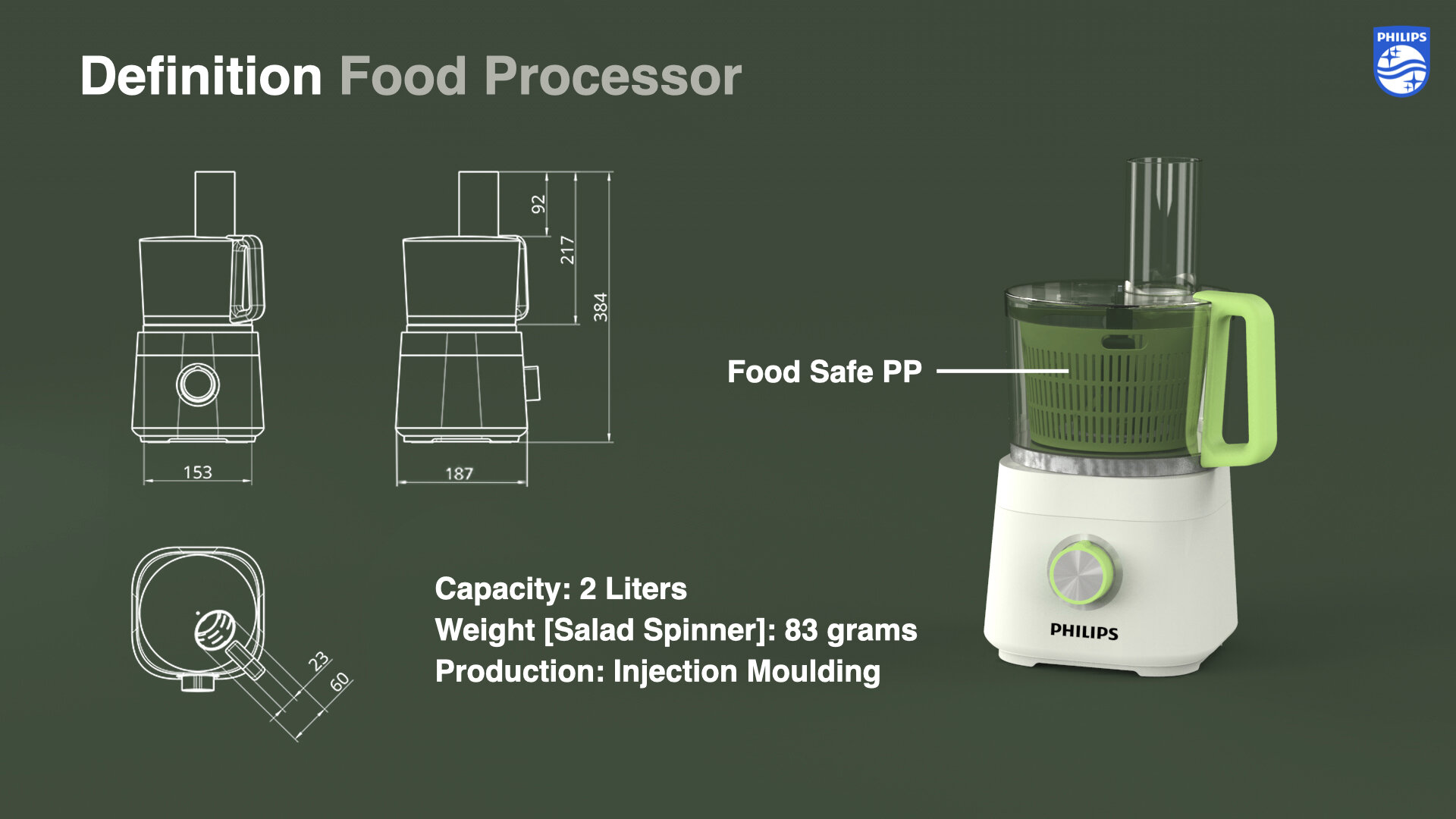
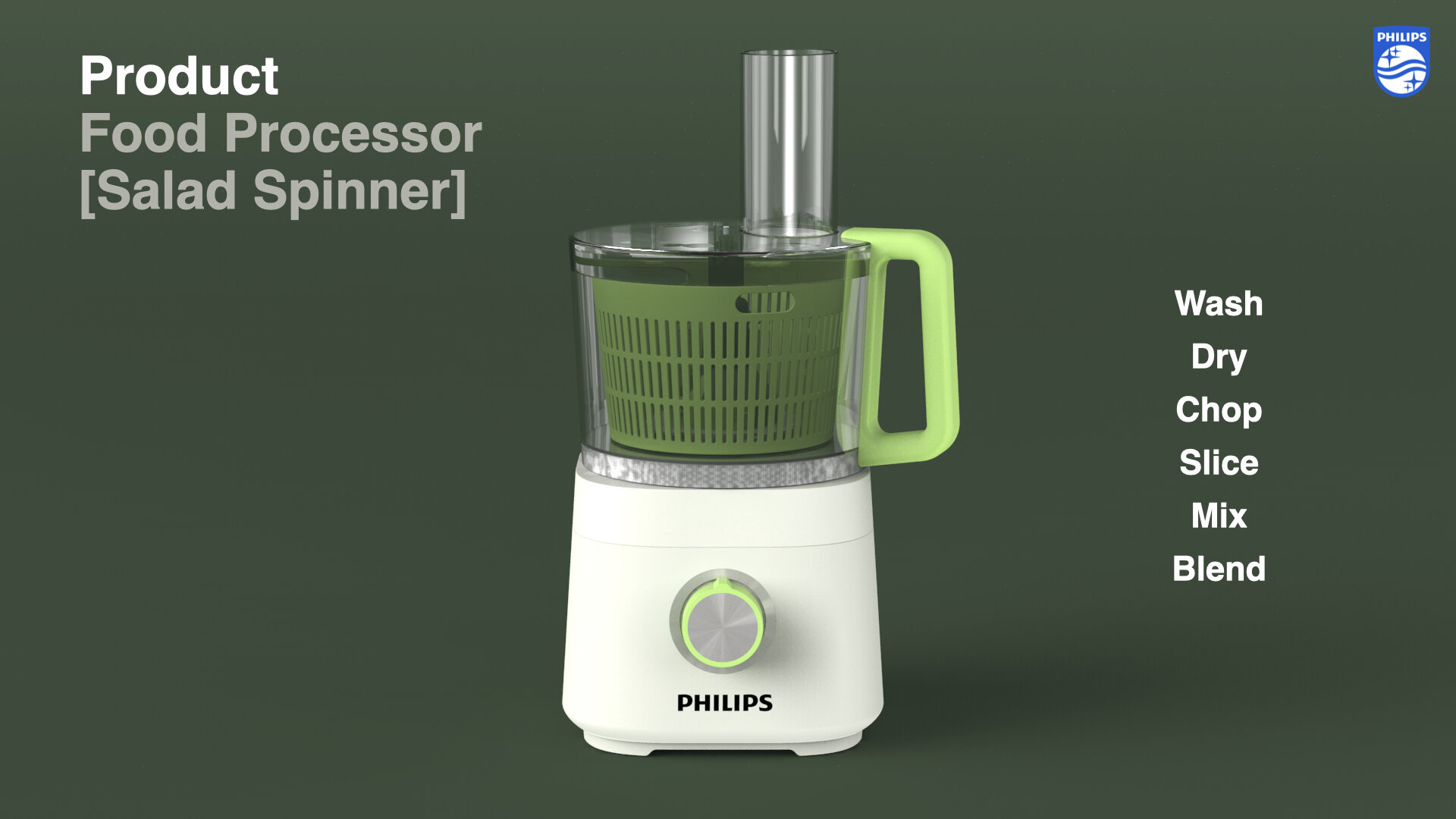
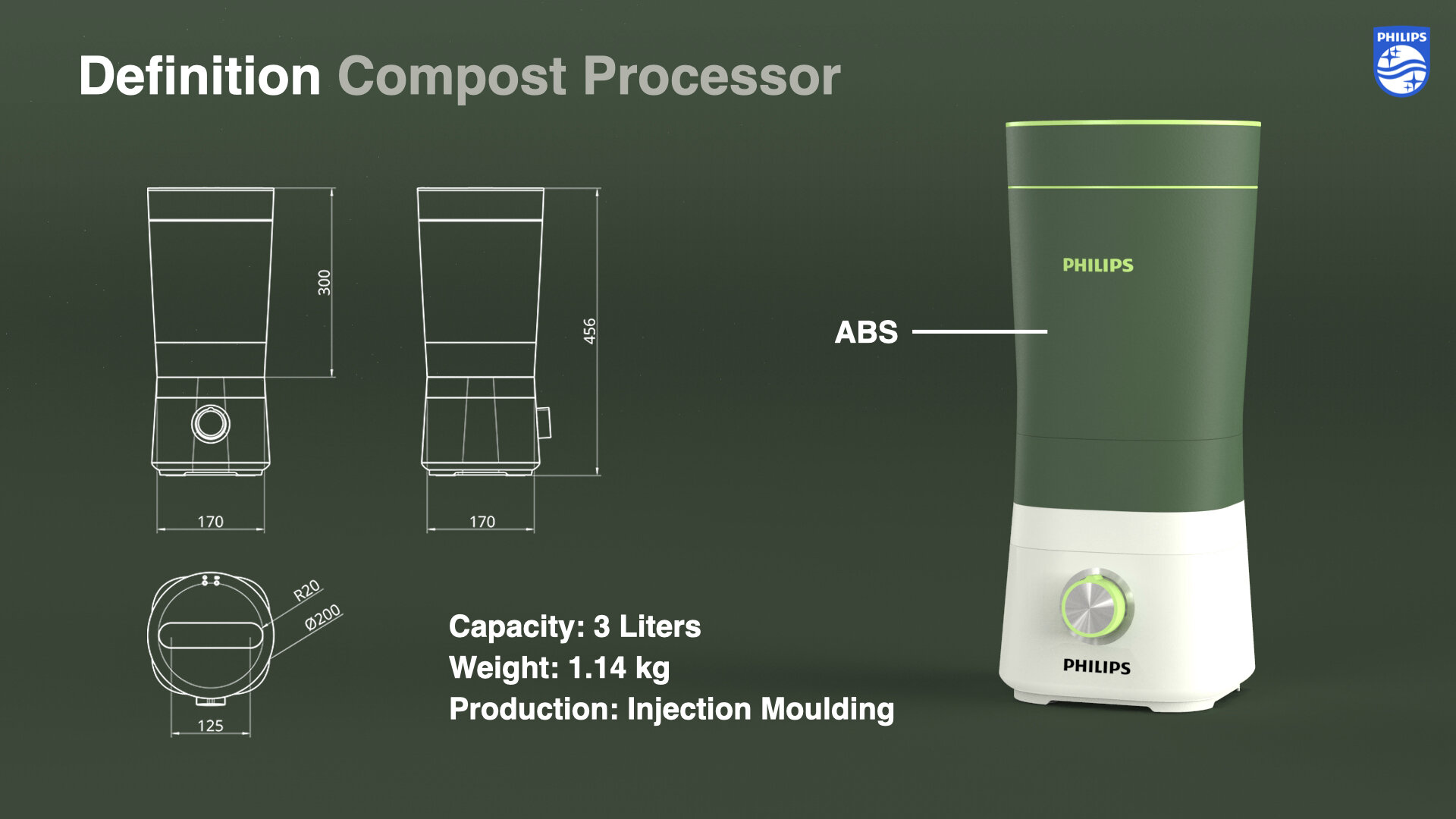
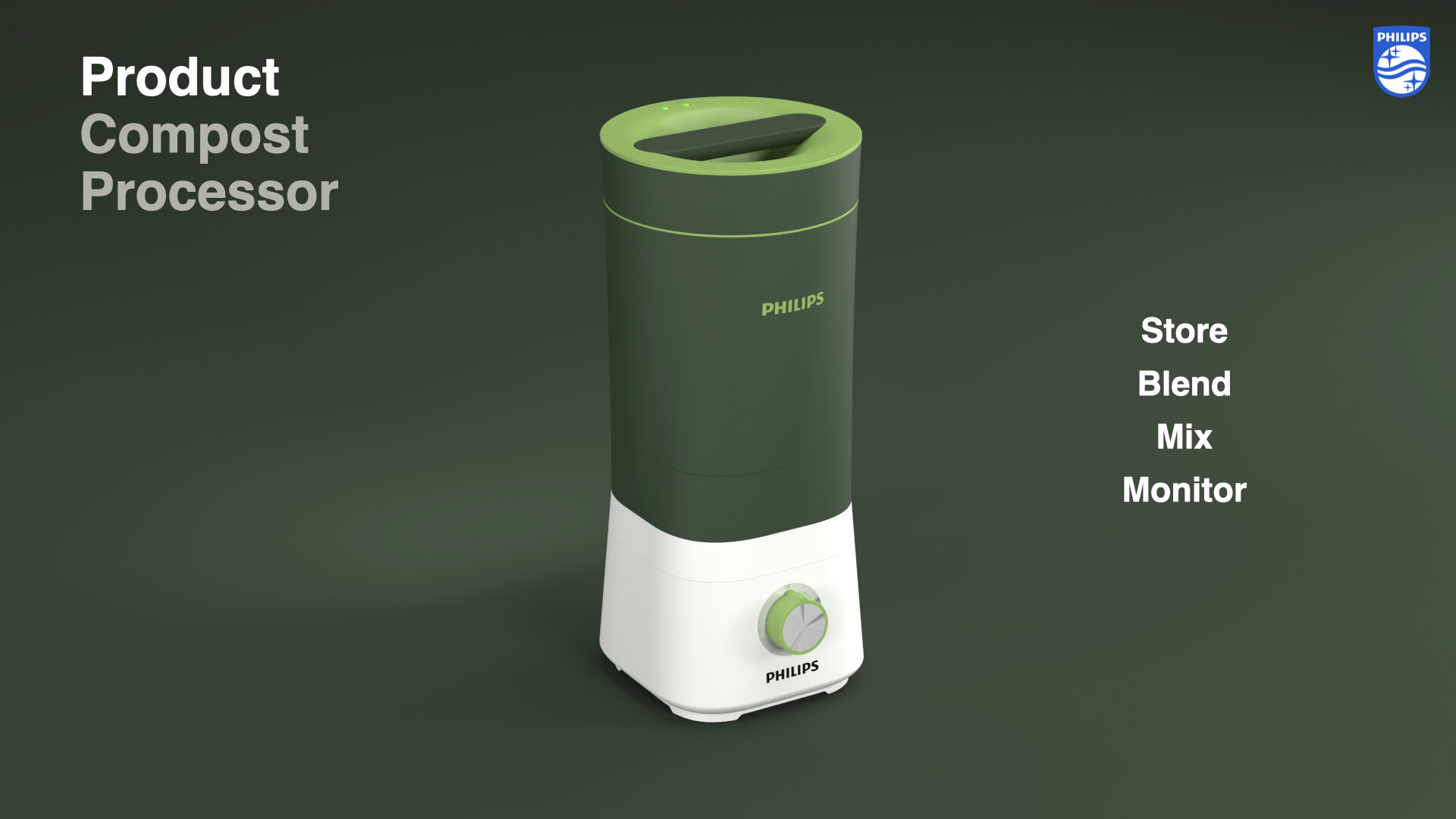
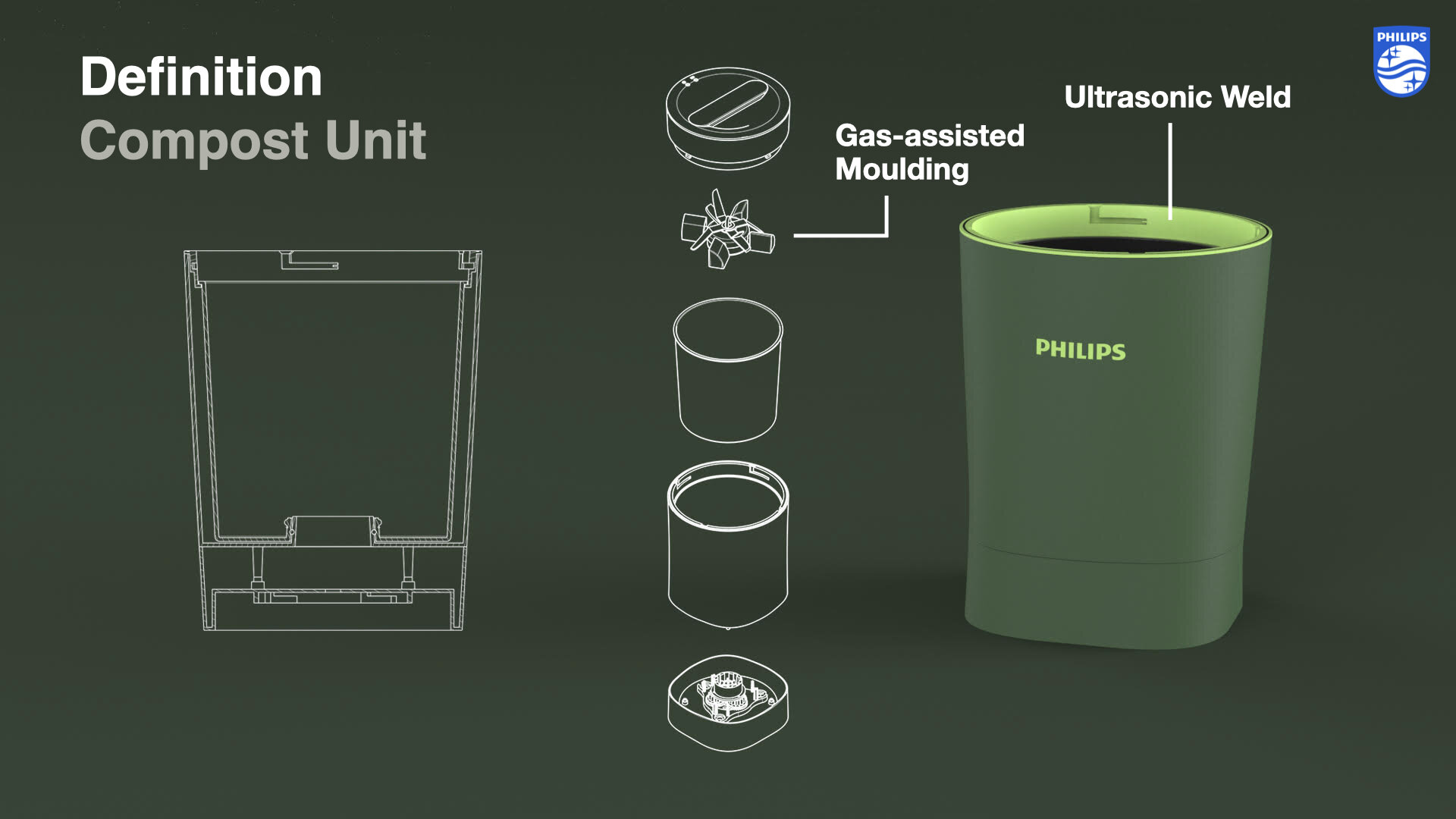
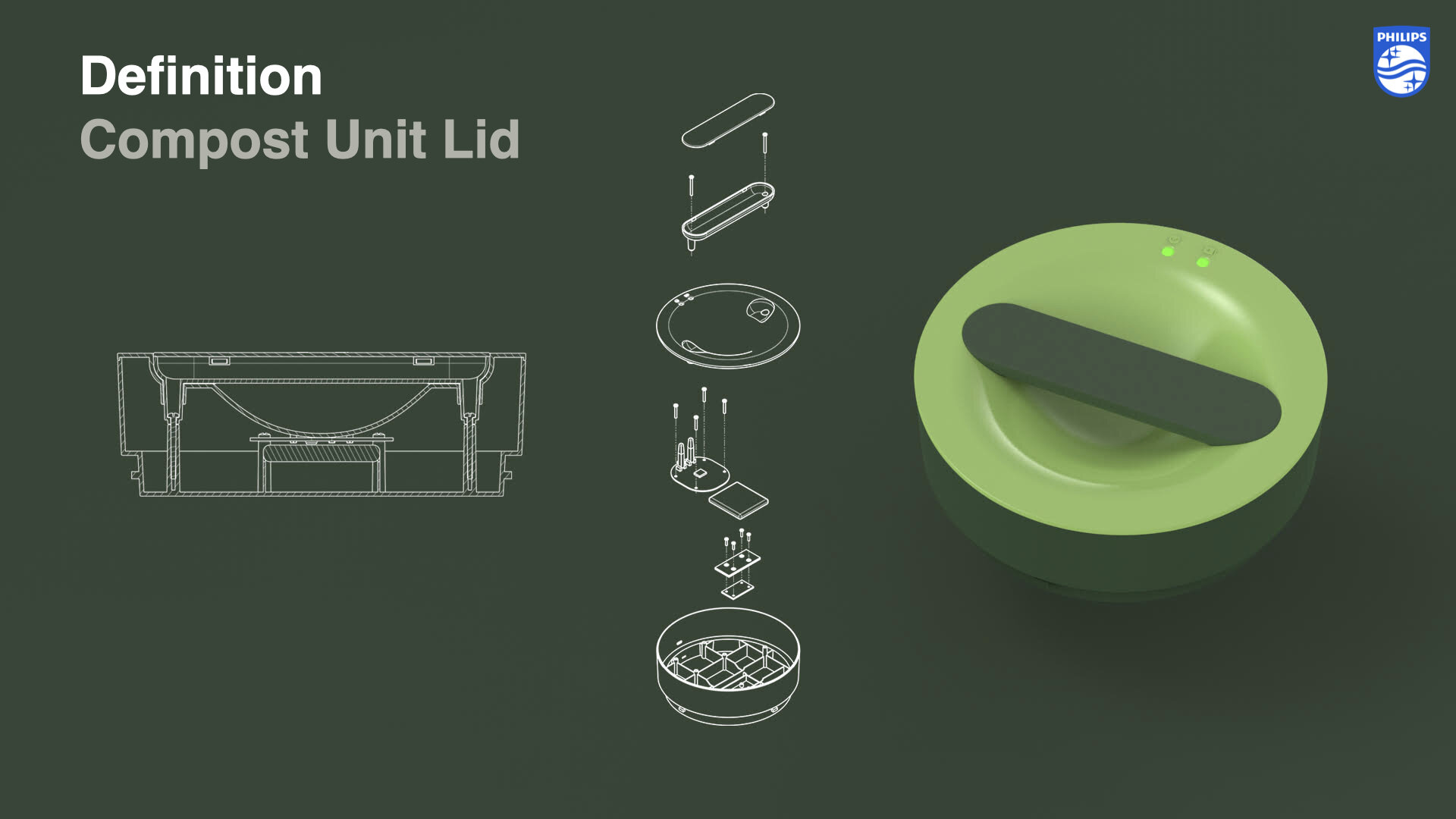
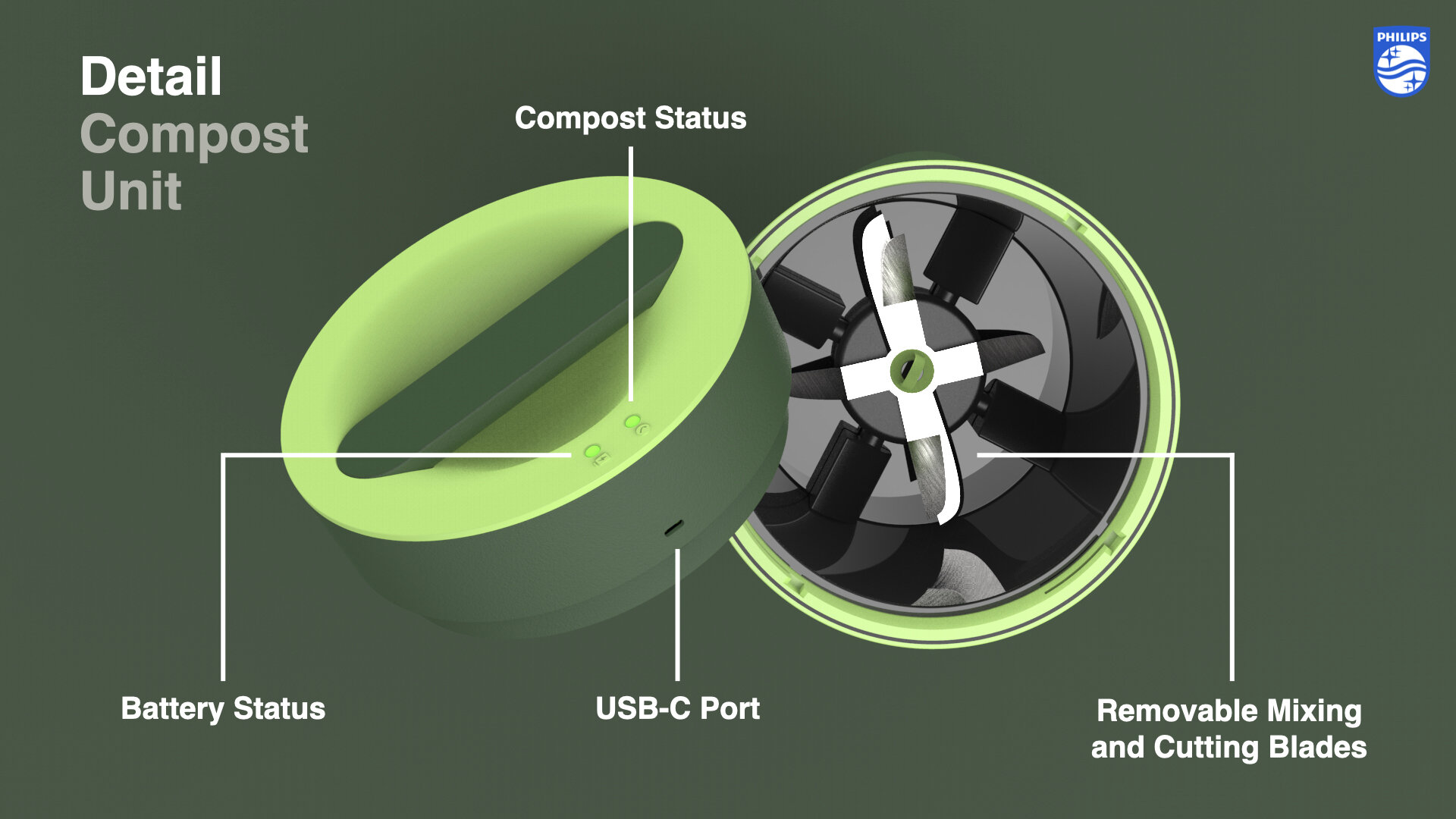
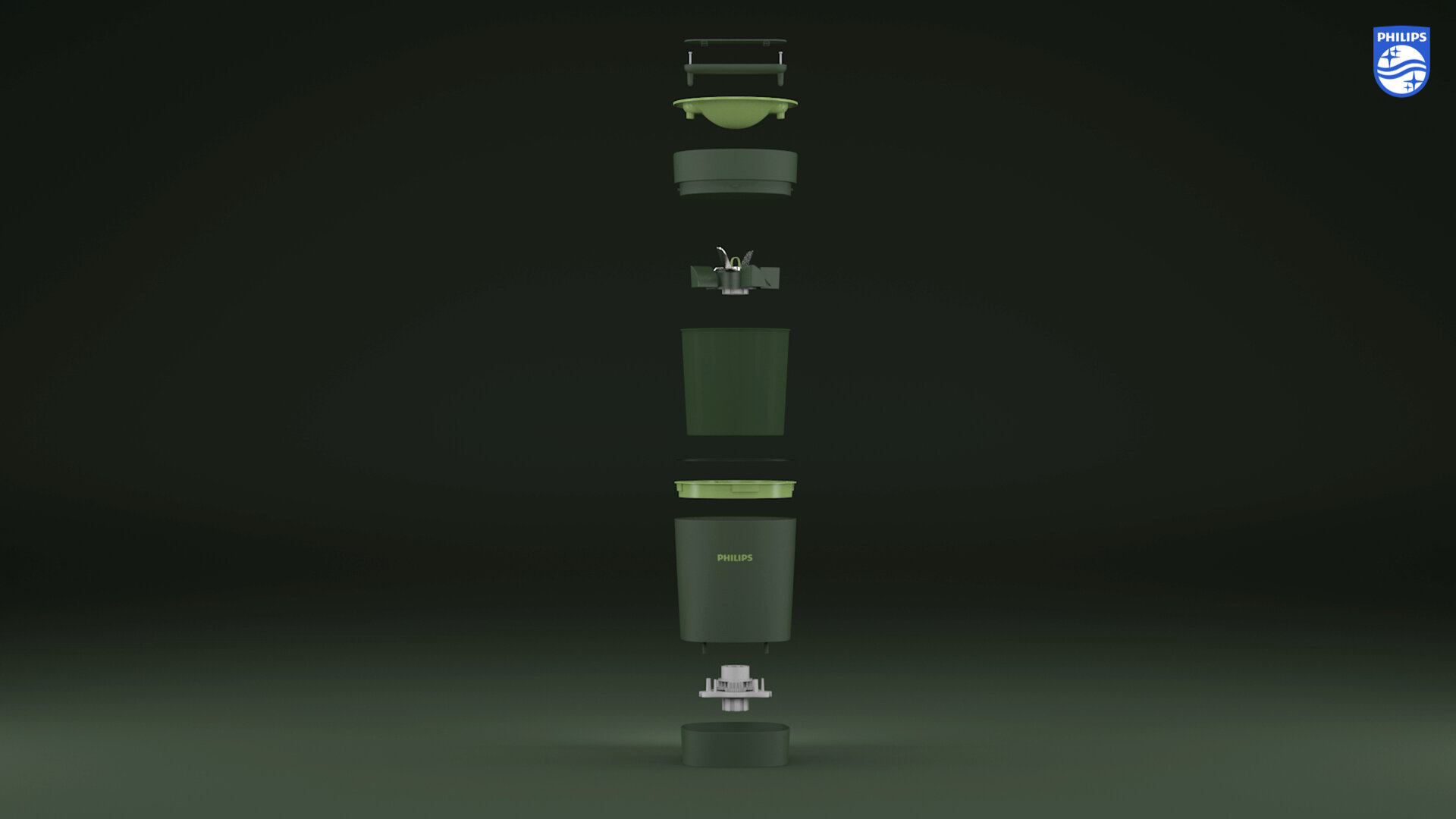
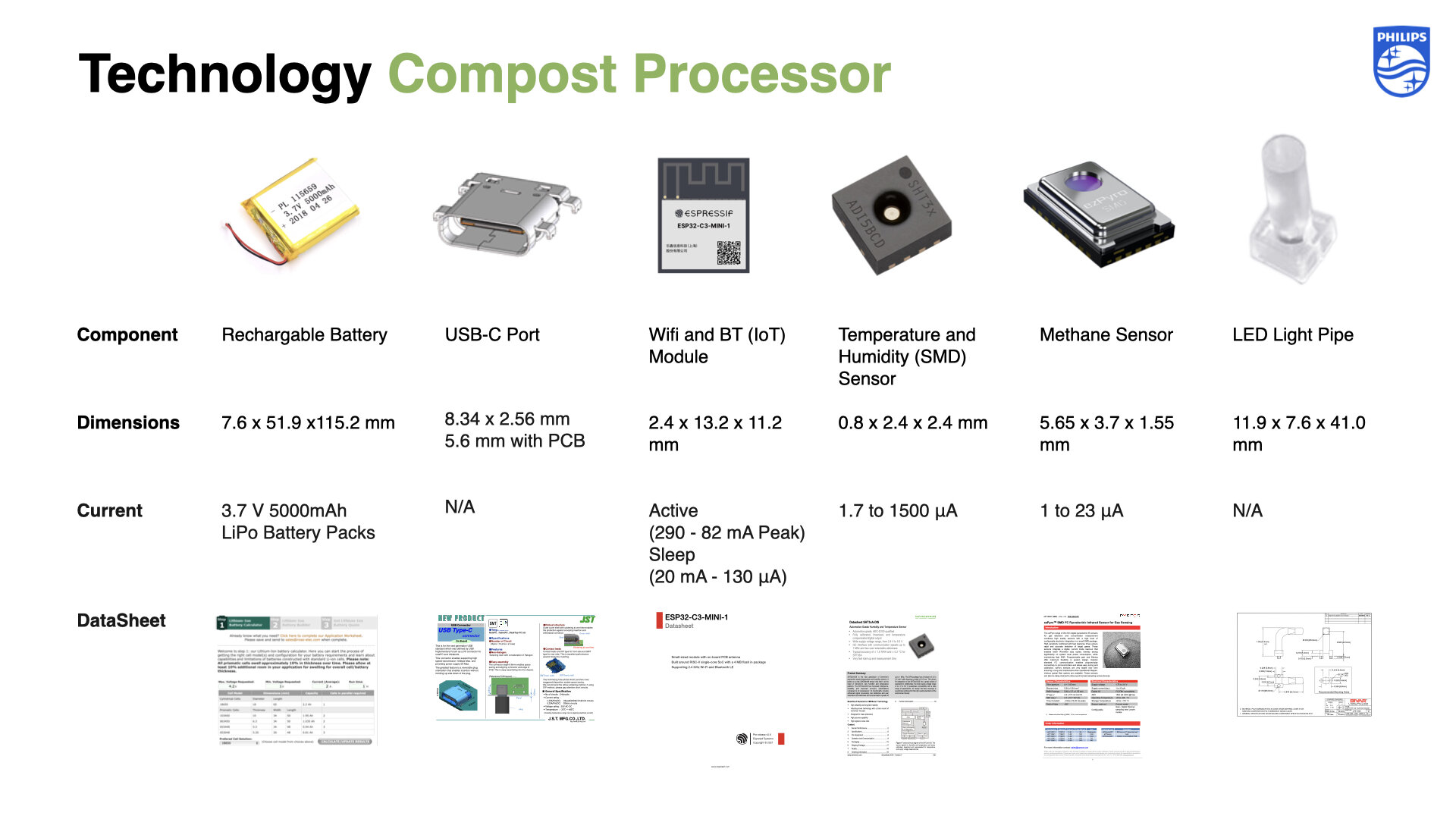
Strategic Integration & Cost Savings: By designing a specialized produce-washing basket and an integrated compost bin attachment that seamlessly fit the existing Philips Viva base, we leveraged a manufacturing framework Philips already owns to minimize new tooling and development costs.
Tackling a $1.5 Trillion Global Problem: Based on BCG data, the global cost of food waste is projected to reach $1.5 trillion by 2030. The architecture positions Philips to lead an expanding consumer trend toward sustainable living by capturing a massive share of the $700 billion economic opportunity hidden within waste reduction, awareness, and circular supply mechanics.
Consolidating the Countertop Footprint: Instead of crowding the kitchen with a separate compost bin, a food processor, and a produce washer, we took tools the user likely already owns and intelligently consolidated them into a single, space-saving footprint.
Reflection
Learned:
Journey-Led Alignment: Acted as the experience designer alongside engineers and industrial designers. By aligning on the user journey, we anchored complex hardware constraints into a cohesive, tangible solution. This strengthened my passion for design with no boundaries—where physical, digital, and service design meet.
Cross-Cultural Taste & Universal Design: Collaborating across four distinct nationalities (Kuwait, Spain, England, and Taiwan) brought diverse perspectives to the table, highlighting varying communication styles and aesthetic expectations. Ultimately, this experience proved that while design tastes may differ, fundamental human behaviors around sustainability remain universal—proving that human-centered design is the true universal language needed to align a team toward a singular, cohesive vision.
Thinking forward:
Behavioral Onboarding: The onboarding experience for first-time composters is an untapped opportunity. How do we make an unfamiliar behavior feel approachable from day one?