

spectacle: new Music Service
Role: Pop-up Experience Design · Service Blueprint · Value Chain Mapping · Research
Timeline: 9 weeks (2019)
Team: Visual Designer, Researcher, UX Lead
Recognition: Selected as the Service Design method example in Universal Methods of Design, Expanded and Revised (2019)
Most people who've never been to an opera actually enjoy it when they go. The problem isn't the experience — it's everything around it. The unfamiliarity. The effort. The feeling that it's not for them.
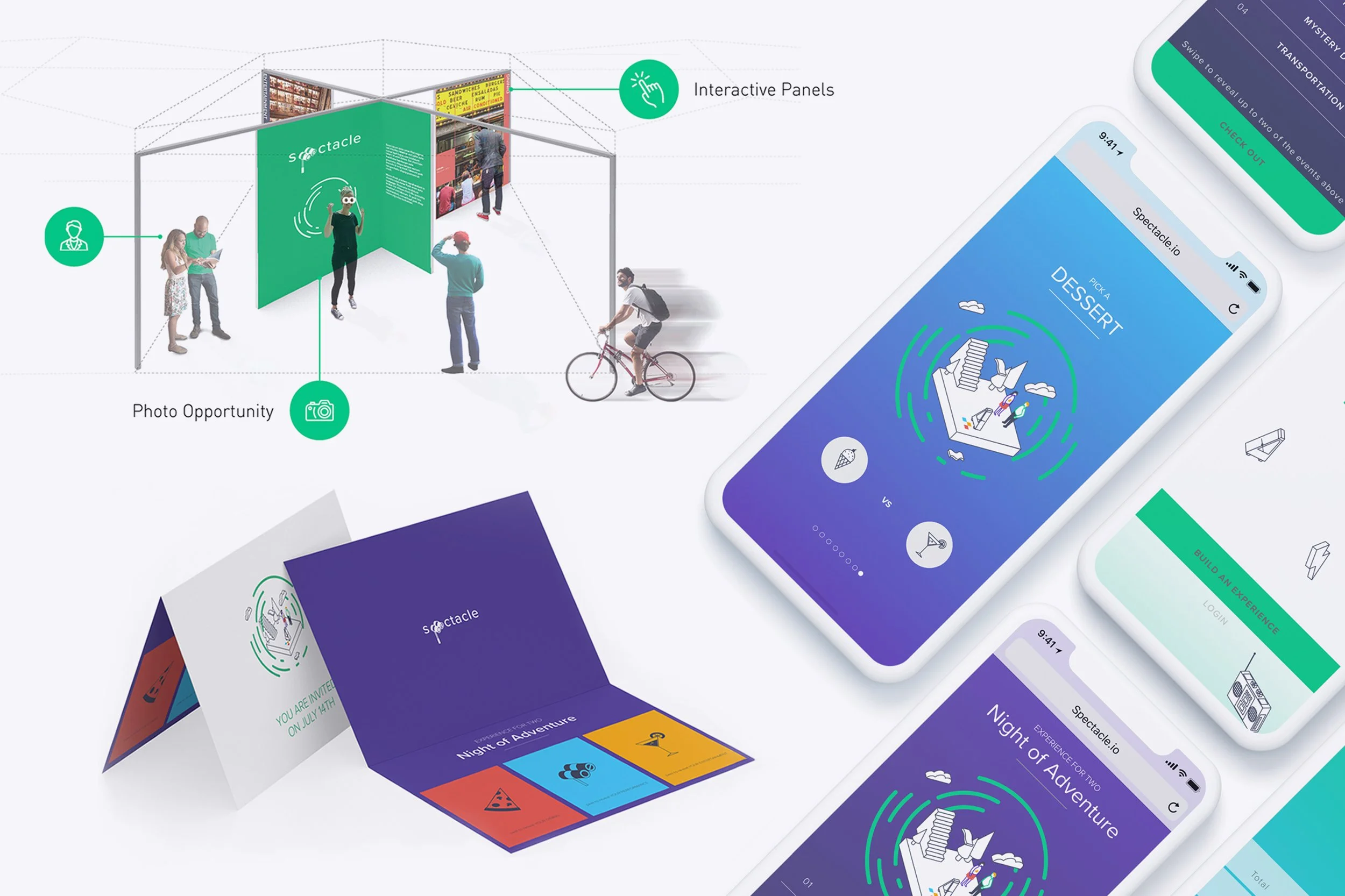
Spectacle is a speculative service concept that curates personalized package experiences centered around cultural music events, dining, and entertainment. Across four core experiences—a physical Pop-up, a Web App, a physical Invitation, and the main Event Experience—the service journey connects digital discovery with physical spaces.
THE OPPORTUNITY
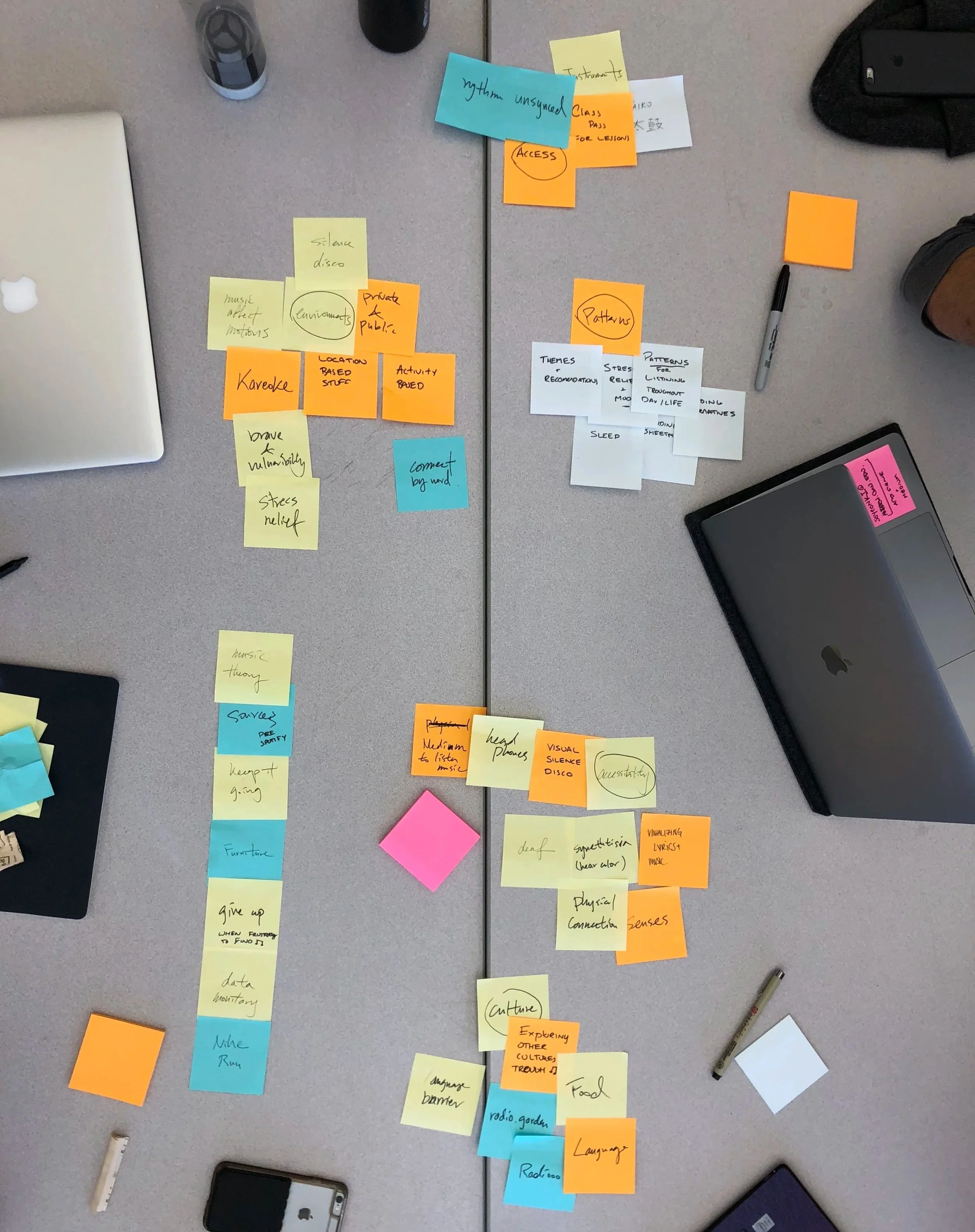
We started broad, exploring how music shows up in people's lives across five territories: patterns, culture, access, inclusivity, and environments. What kept pulling us back was culture, recognizing music as a powerful dual-force vector for identity:
Connect to Roots: A way for people to connect (or reconnect) with their cultural foundation.
Plant New Seeds: A means for people to expand their interests beyond what's familiar.
Once anchored in music and culture, we ideated across three distinct thematic directions. Our decision was driven by immediate real-world urgency: a surge of news highlighted how major cultural anchors, like the Metropolitan Opera, were profoundly struggling to fill empty seats, and we wanted to tackle that exact crisis.
Engagement:How might a music service increase engagement with music genres that are struggling or falling out of fashion?
Language: How might a music service lower barrier for language learning?
Activism: How might we utilize music to share messages and hold meaning conversations for activists?

To understand the ground truth, we sent out surveys specifically expecting that our respondents were probably not regular opera patrons. This expectation proved completely true, and it helped us isolate a profound paradox:
Volition Gap: Very few respondents had ever gone to an opera of their own volition
High Satisfaction: Most people who had actually been to an opera thoroughly enjoyed it.
The True Friction: Reluctance wasn't about the music; it was driven by false preconceptions and a heavy hesitation to invest time, money, and effort into an unfamiliar environment.
The problem wasn't the performance, it was the getting people through the door. We decided to focus on re-engineering the access pipeline and reducing psychological friction.
SURVEYING THE AUDIENCE


We presented three service scenarios in different forms through speed dating sessions—gathering rapid feedback on what resonated. The touchpoints that excited people most became the building blocks of Spectacle.
Opera Kumon: educating and engaging youth
Aria Matchmaker: engaging on web and social media
Cultural District Lottery: engage in person
TESTING IDEAS


With a user baseline established, we turned to the supply side. We interviewed music instructors, marketing directors, and Pittsburgh Festival Opera staff to understand their operational realities. This research forced a major strategic pivot:
Opera is highly seasonal, running only a few productions a year. A standalone opera service would suffer from massive engagement dead-zones. We expanded our scope to encompass all institutions under the Pittsburgh Cultural Trust—including the symphony, ballet, and concert series—giving Spectacle a much richer canvas to work with.
The Pivot


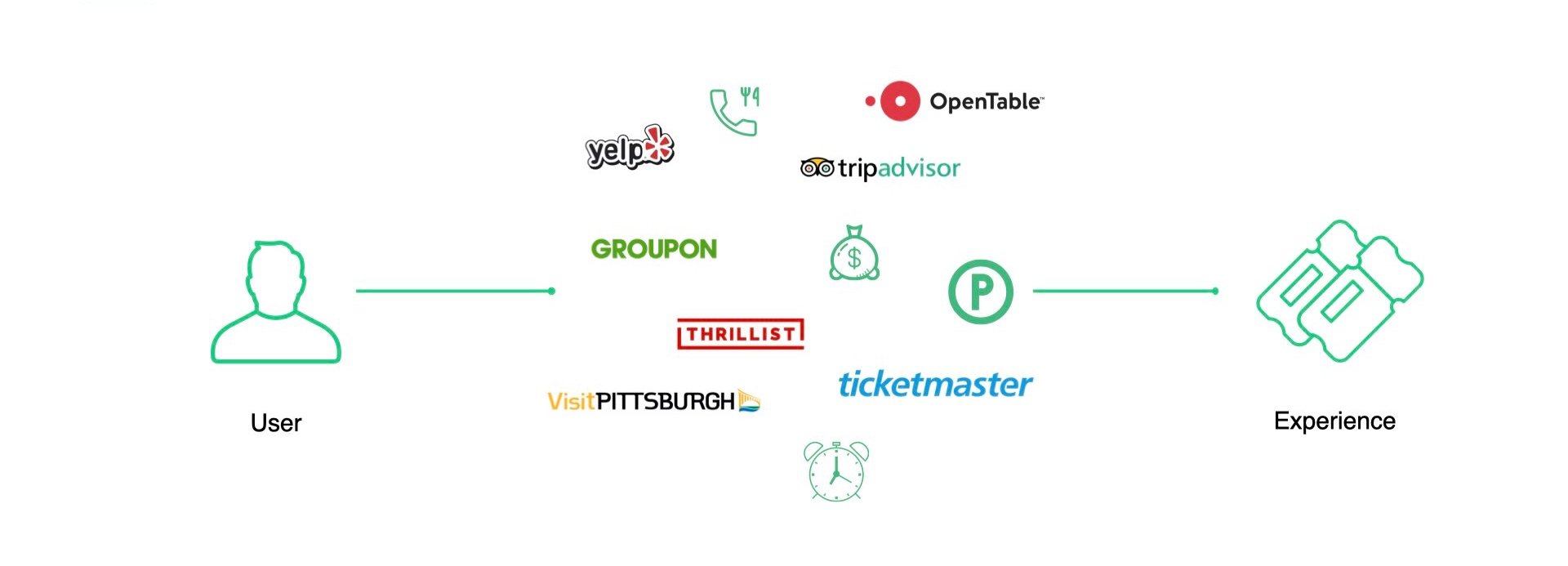
Before Spectacle

With Spectacle

I contributed to the service blueprint — mapping actors, touchpoints, and backstage processes across the full customer journey from awareness to return.
Mapping the Experience
Final Service Blueprint
I mapped the value flow independently — tracing how money, data, and experience circulate between users, Spectacle, art organizations, partners, venues, and performers.
The Value Chain
We put our early wireframe screens in front of target users to answer three big questions: How comfortable are they sharing data? What do we need to ask to build a custom package? And how much of the experience should be a surprise? What we discovered:
Two types of users: those who want full control over their evening and those who prefer a fully packaged surprise VIP experience.
Interests in events: users showed interest in event types like bars, ice cream places, coffee shops, museums, and parks.
Minimize onboarding process: Users appreciated minimizing the onboarding process. They suggested including illustrated people, generating different combinations, displaying reviews, and offering physical invitations, such as a boarding pass. The boarding pass idea came directly from users—and became one of Spectacle's distinctive touchpoints
User test web app


design principle for the pop-up
From our initial survey, web experience user tests, and idea testing sessions, I designed the physical pop-up shop experience. Below are the design principles:
How users feel going in:
False preconceptions about what they'll experience
Desire to try something new
Uncertainty about the value of a packaged experience
What the space needs to do:
Open, welcoming space — whimsical and playful with bright colors
Clear service overview — dining, performance, entertainment
Lightweight and easy to transport
How that becomes physical:
Variety of choices — look, categorize, explore
Mystery — open, close, reveal
Autonomy — own, hold, take
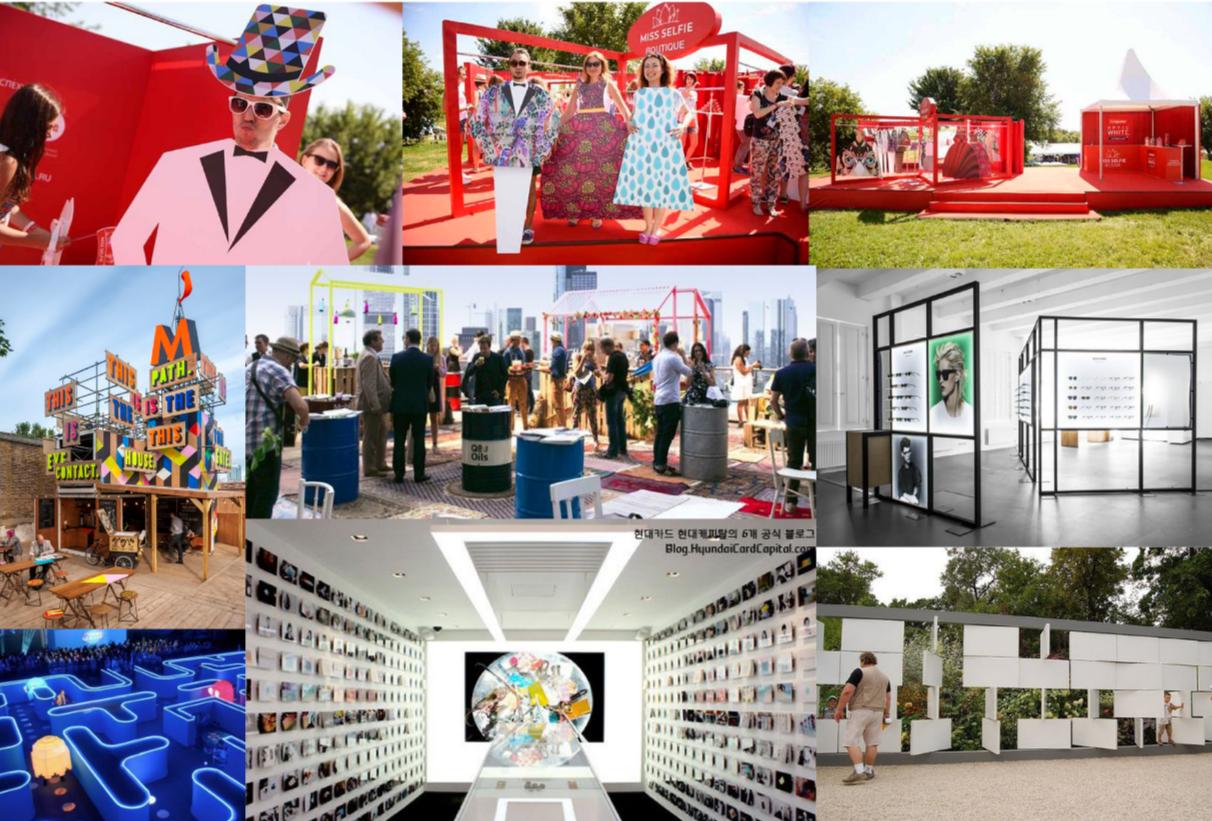
Moodboard for Spectacle pop up experience
Spectacle is a speculative service concept that curates personalized package experiences centered around cultural music events, dining, and entertainment. Across four core experiences—a physical Pop-up, a Web App, a physical Invitation, and the main Event Experience—the service journey aims to revitalize interest in these music genres and provide a memorable, holistic experience for users. Each main touchpoint addresses the key problems identified in our research.
Final RESULT


The physical Pop-up lowers the barrier to entry. I translated the psychological concept of mystery into a physical interaction we call 'Tap to Reveal'—giving potential audiences a tangible taste of the arts while creating a seamless, low-friction onboarding path straight into our web app.
the pop-up
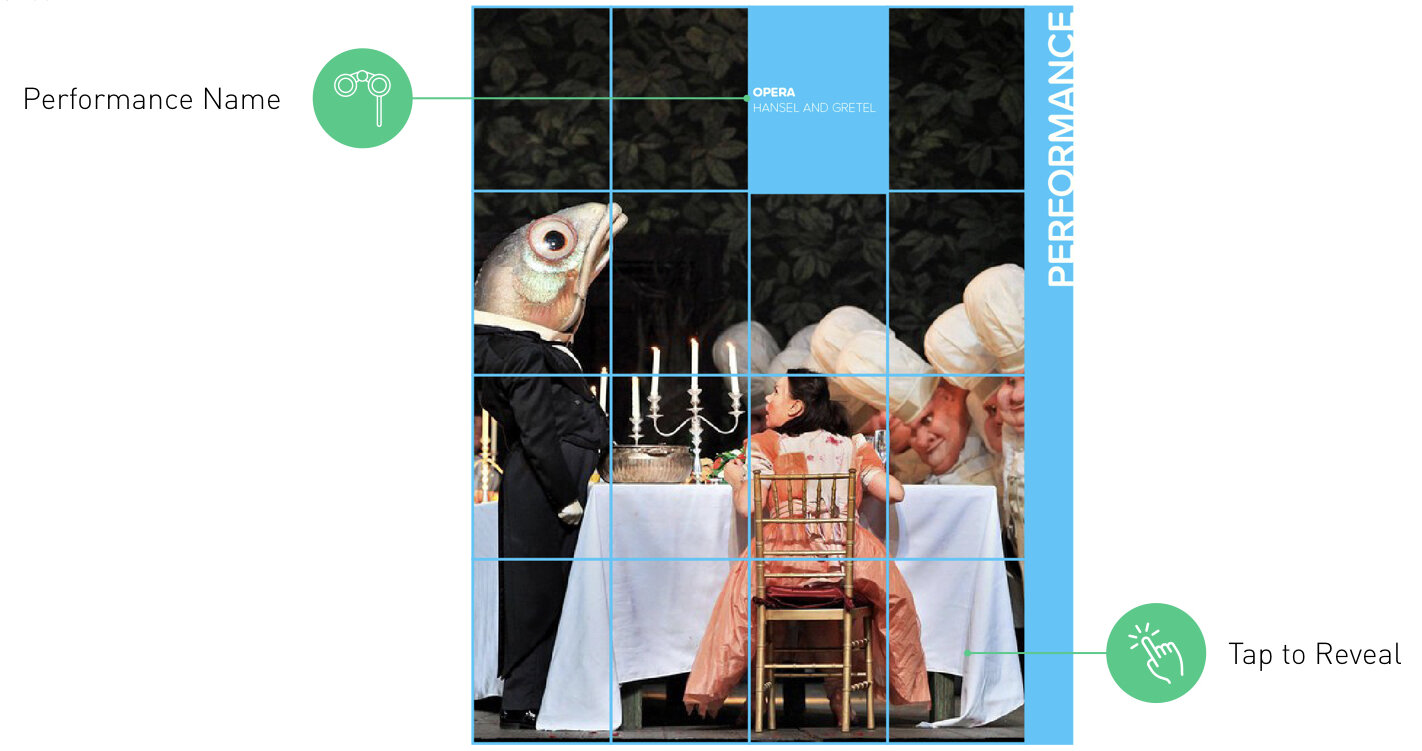
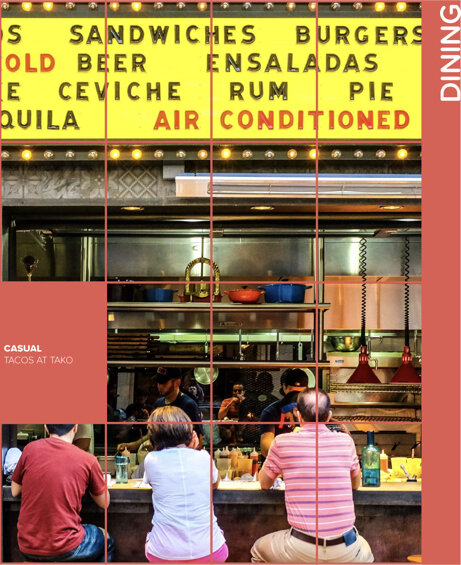


The Web App educates users on what to actually expect. By pulling back the curtain on the performance and allowing users to seamlessly customize their journey, we remove the intimidation factor that typically keeps new audiences away from the arts.
THE WEB APP


The physical Invitation considers the entire end-to-end experience. It acts as a literal passport to a fully packaged journey, extending the experience beyond just the night of the show and building anticipation long before the user ever steps into the theater.
THE INVITATION

Finally, The Experience wraps up with a post-event review on the web app. This creates a direct exchange of data between Spectacle and the partner venues, beautifully fulfilling our fourth principle: fostering continuous communication between arts organizations and their audiences. This gives the Trust the exact data loops they need to retain these new viewers long-term.

Concept Video
REFLECTION
Learned:
Collaborative alignment: Operating in a multi-disciplinary squad alongside a visual designer, product researcher, and UX lead completely shifted my mindset. I realized there is no single "best" idea that comes from one person. Instead, truly seamless experiences are continuously crafted by balancing diverse team perspectives, stakeholder constraints, and direct user feedback.
Navigating ambiguity by zooming out and zooming in: Building a service from scratch means sitting with constant uncertainty. I learned to navigate it by zooming out to stay aligned with the core strategy, then zooming in to refine concrete touchpoints through real-world validation. Continuous conversations, field research, user interviews, and rapid testing turned a blank canvas into a cohesive ecosystem.
Thinking forward:
Partnerships: How can we expand our thinking beyond the Cultural Trust and explore strategic partnerships with the Pittsburgh arts ecosystem as a whole?
Onboarding: How can we design a seamless backend onboarding system that makes it incredibly easy for independent venues to partner with Spectacle?
Data: How can we present user interaction data within Spectacle to help arts organizations derive actionable, meaningful insights about their audiences?