

united nations: centralized DIGITAL PORTAL
Role: Service Designer, Researcher (In-House)
Timeline: Oct 2020 – Mar 2021 (6 months)
Team: Manager (Chief of Information Management), Content Writer, Technologist
Organization: United Nations - Information Management Team
Impact: Aligned service narrative. Centralized global resources. Increased service visibility.
The UN Information Management Team (IMT) functions as an internal consultancy, providing data tools and advisory services to staff across the UN Secretariat. But IMT's real work was scattered across five UN intranets with no consistent identity, so the team struggled to get credit for it, bring in new clients, or hold onto the ones it had.
Over six months, I introduced service blueprinting to the team, led blueprint workshops, and established a shared strategic roadmap to unify IMT's service narrative and launch a centralized global portal. The method and outcome were so well received that team leadership asked me to present the service blueprinting methodology at the UN All-Hands meeting to evangelize the practice across other departments.
Explore the Ecosystem
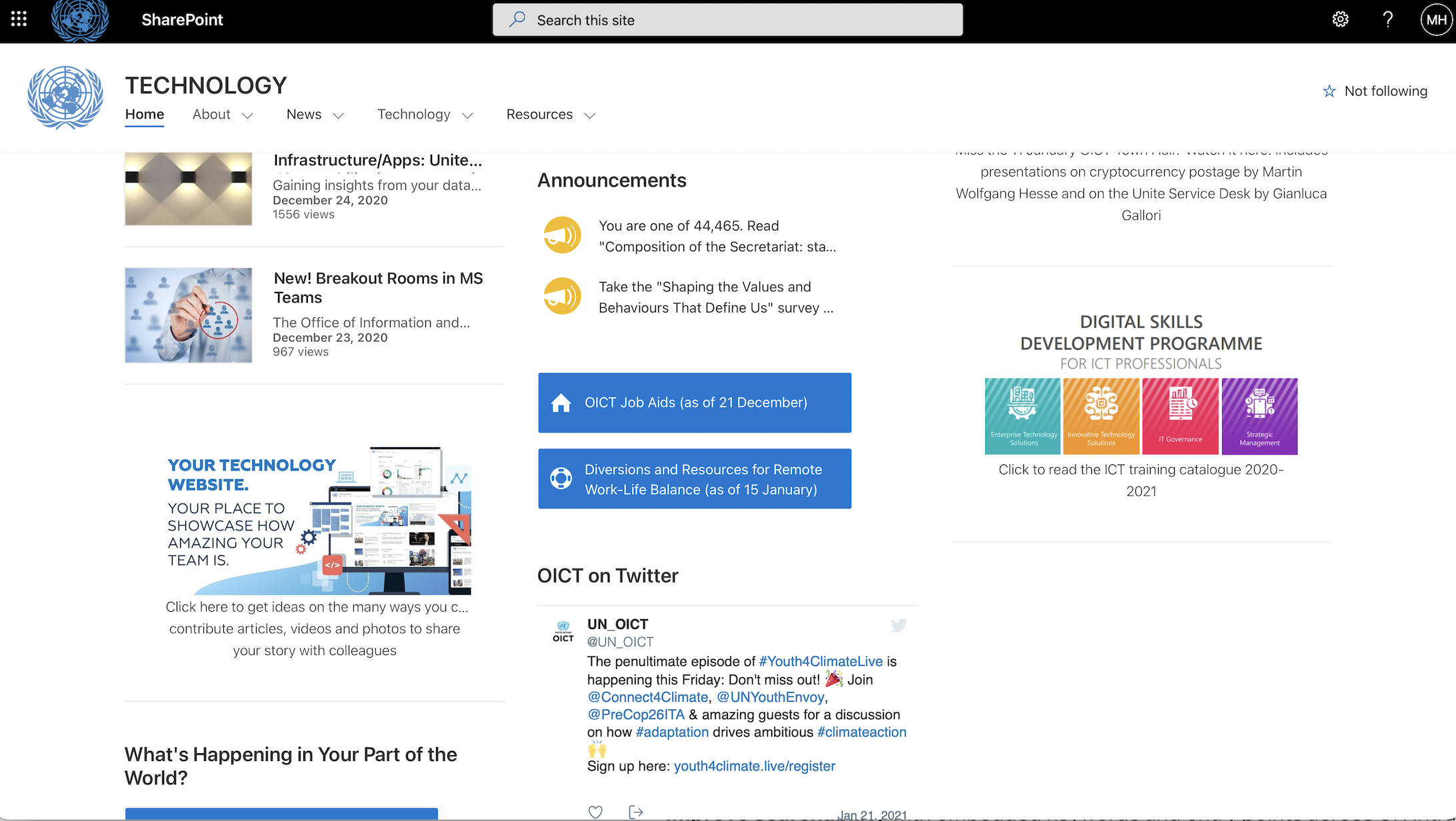
I started to research how the Information Management Team functions within the larger organization. I did usability walkthrough the client journey across five UN intranets, sat in on client consulting meetings, and held one-on-one interview with my manager, asking questions like: Who are our clients? Which sites do people go through during the day? How do we make an impact?
Diagnose
the Gaps
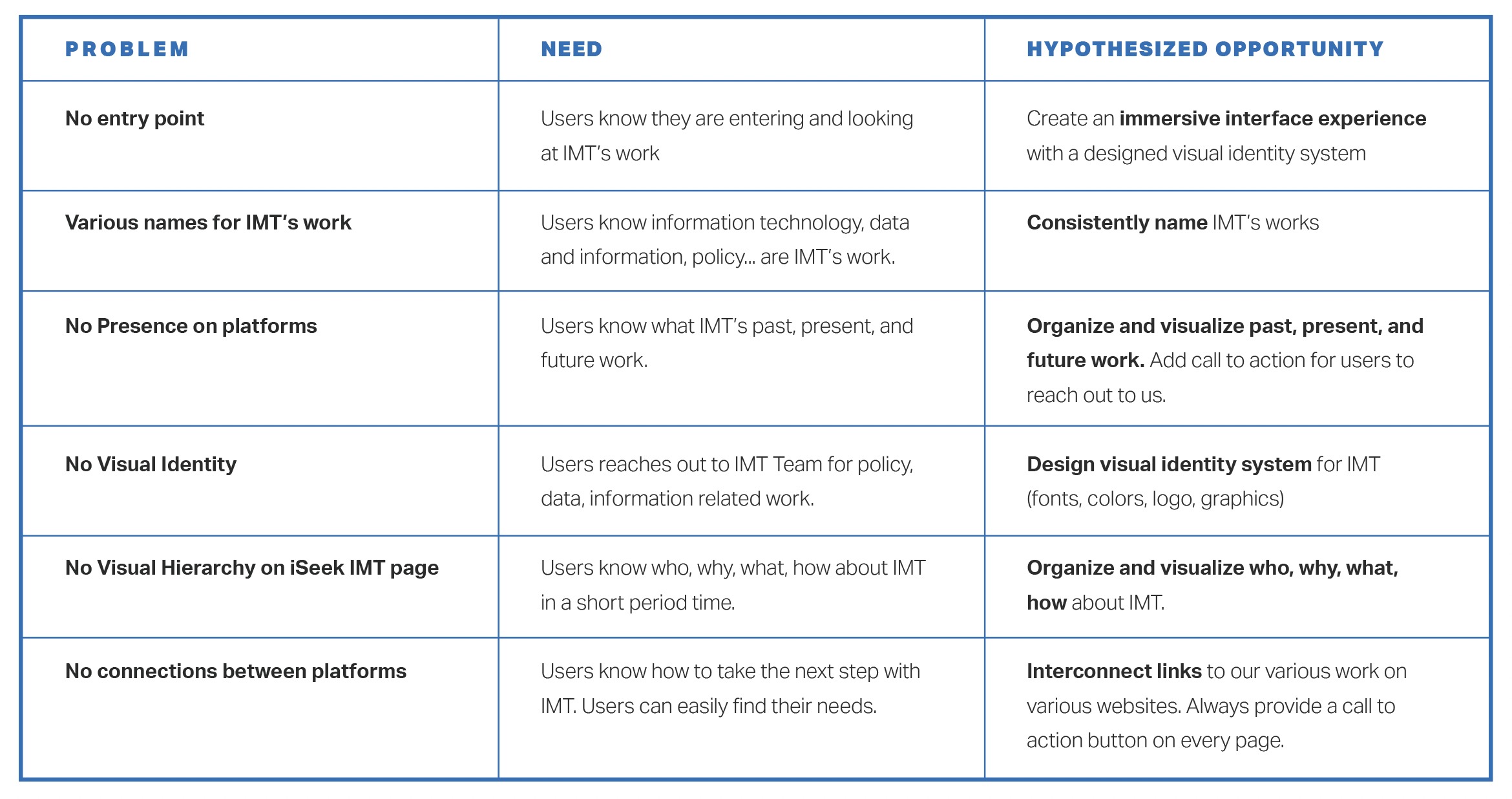
That research showed IMT already had a page on iSeek, but it was incomplete and disconnected from the rest of the team's work. Here's what the research surfaced:
Align the
Service Journey
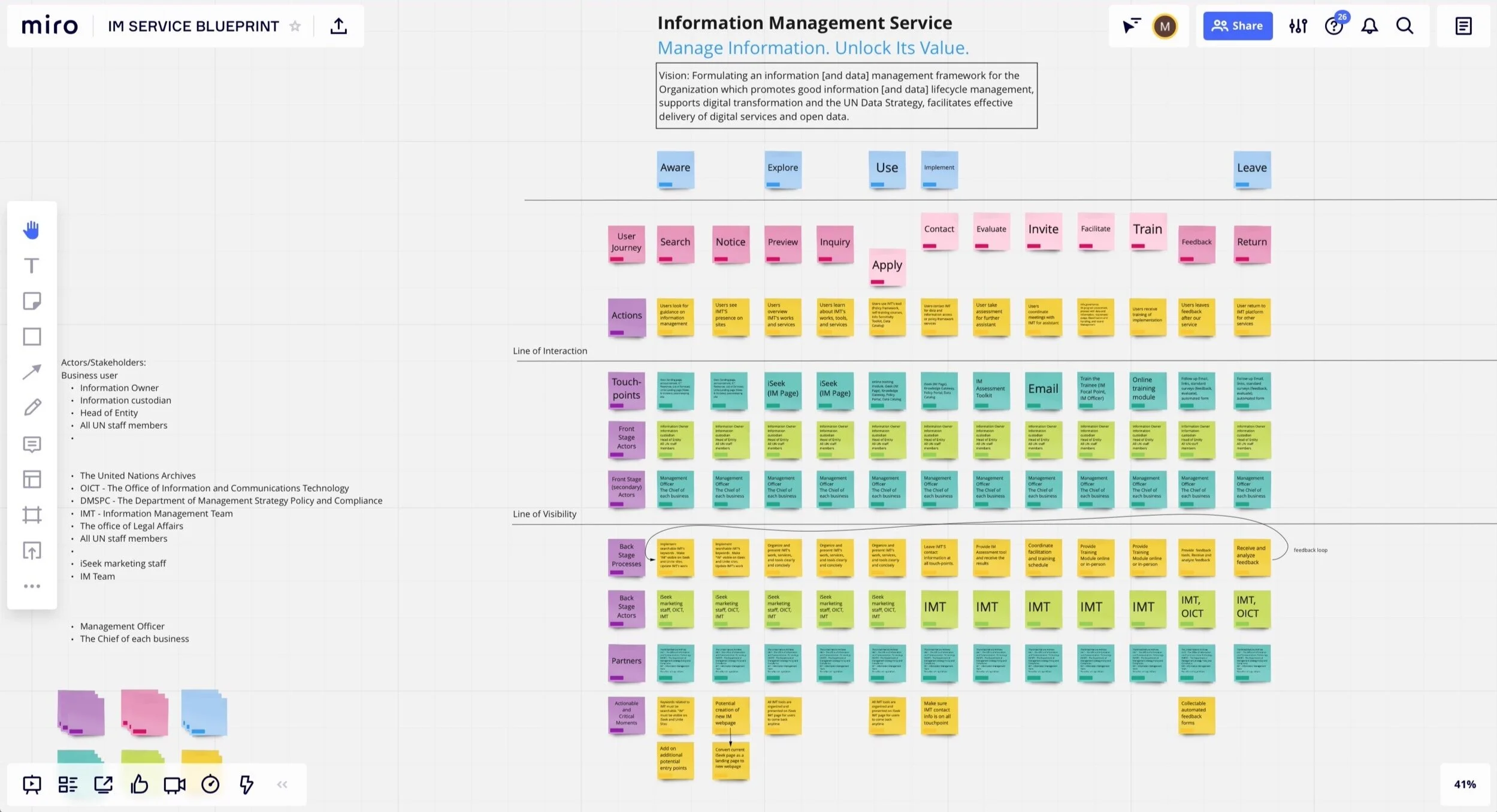
Two key problems stood out: a fragmented navigation journey and an inconsistent team service identity. I proposed using a Service Blueprint to align the team around an ideal client experience, clarify our core value offerings, and categorize resources.
Since the team wasn't familiar with the analysis method, I architected the initial framework with information I already knew. Once the method proved valuable to my manager and the rest of the team was on board, I led workshops with our cross-functional team of four, collaboratively refining our service mission statement, client journey, and supporting processes.
Workshops on Miro
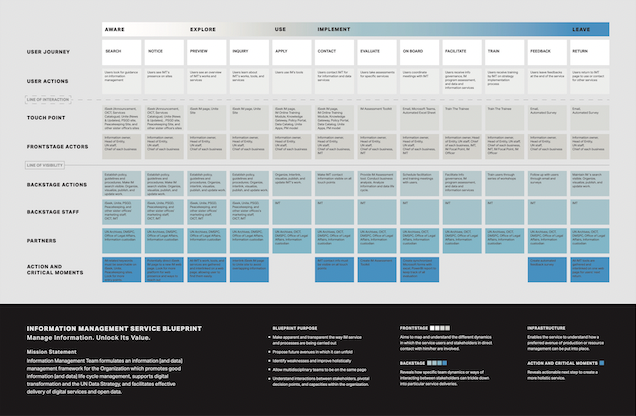
Final Service Blueprint
Define Opportunities & Priority
Client drop-off and low team visibility directly threatened our internal consultancy remit, so I proposed a unified digital front door was our immediate first priority. Concurrently, we needed mechanisms to capture client feedback and prove team value to leadership. Subsequent initiatives focused on long-term discoverability across Secretariat intranets.
Centralized Service Portal (Immediate Service Visibility & Stakeholder Alignment)
To solve the core discoverability and navigation issues from our research, giving UN personnel a single entry point to find tools, understand services, and submit requests.
Assessment & Feedback Toolkit (Value Proof)
To establish feedback loops, measure service satisfaction, and prove the team's strategic ROI to UN Secretariat stakeholders, championed by leadership as a next priority.
Global Intranet Searchability & Taxonomy (Scalable Organic Discoverability)
To standardize resource naming, strategic keywords, and entry points across UN intranets so the portal continues driving organic traffic over time.
Translated fragmented navigation and inconsistent team identity into an actionable service roadmap.
1
Centralized Service Portal: Immediate Visibility & Alignment
With only three months left out of the six, I prioritized and delivered the Centralized Service Portal first, the highest-impact item for immediate visibility. The Assessment & Feedback Toolkit and Global Intranet Searchability initiatives were scoped and handed off as the team's next-phase roadmap.
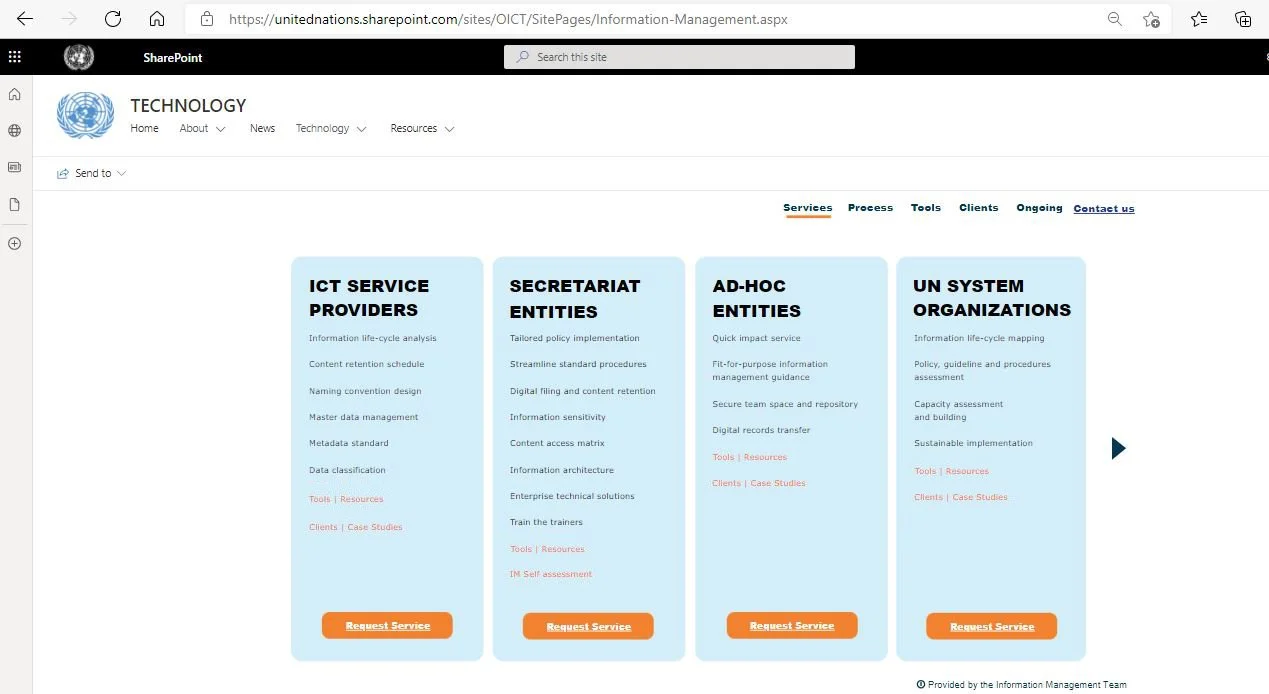
I built the information architecture, drawing on my manager's knowledge of our content to group it into clear navigation. That process revealed we offered plenty of tools and services, but with no clear sense of who each service was for. So we organized the home page around four client-type categories: ICT Service Providers, Secretariat Entities, Ad-Hoc Entities, and UN System Organizations, each showing only the services relevant to that group so clients could immediately see what applied to them.
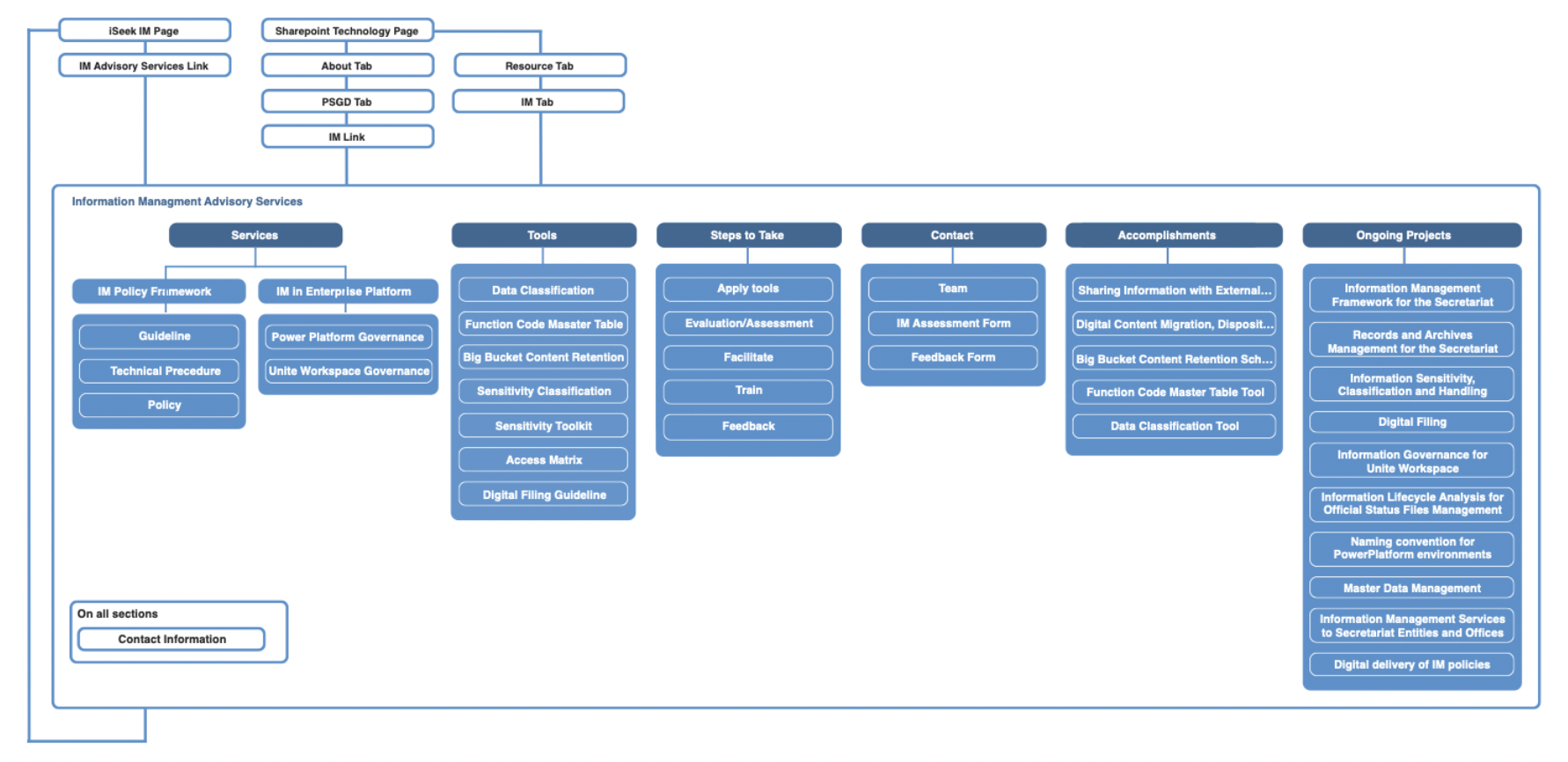
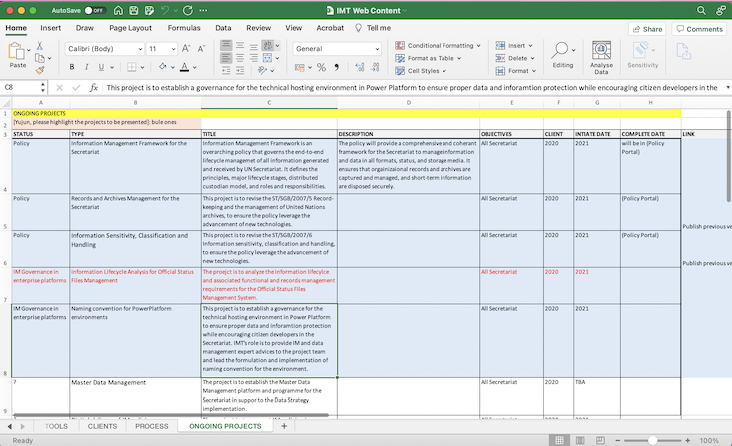
gathered resources
And to standardize naming and interlink all resources, our team began gathering our services, clients, data, frameworks, and resources into one place in Excel.
Design Principles
From there all materials are defined, I created mockups, guided by three design principles:
1. Clear communication of service offerings : Demystify and clearly articulate what the IMT team does. It ensures internal clients immediately understand our capabilities without having to decode complex organizational jargon.
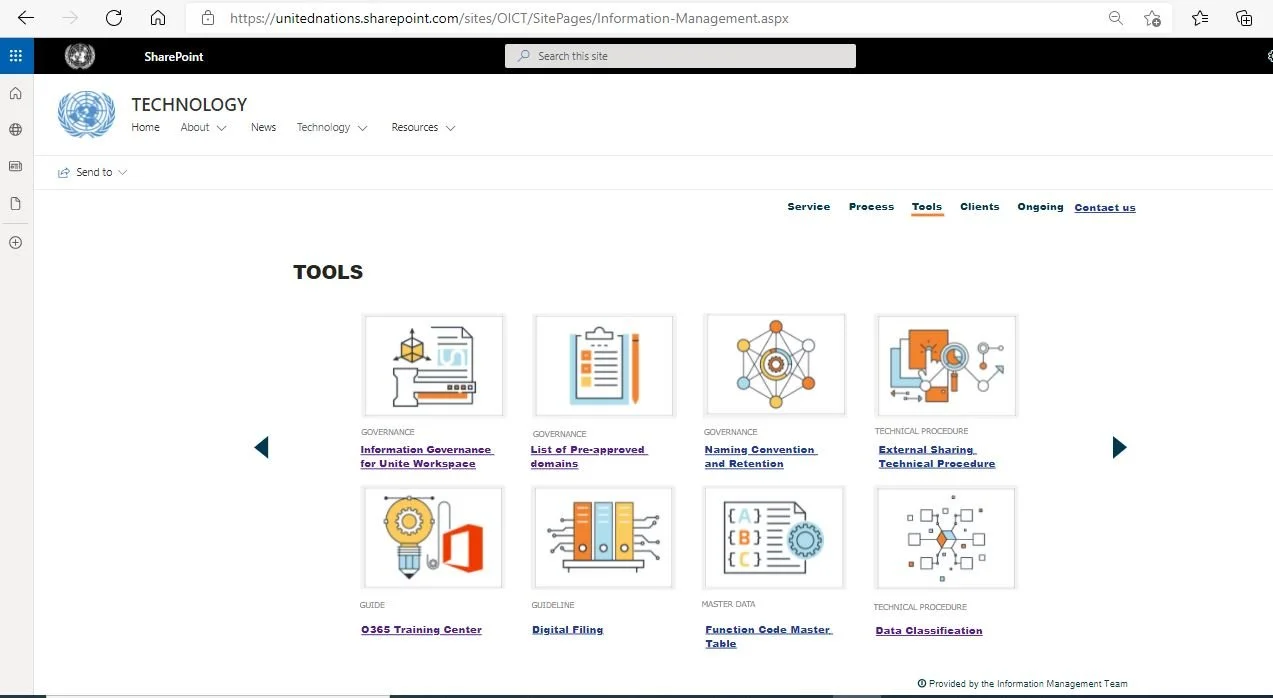
2. Effortless access to existing resources : Centralize all scattered tools and documents into a single, structured repository. This removes the friction of navigating multiple disjointed UN intranets just to find basic assets.
3. Seamless contact paths : Streamline the underlying mechanics for how clients request consulting. The interface should make initiating contact or submitting a service query an intuitive, one-click action from any page.
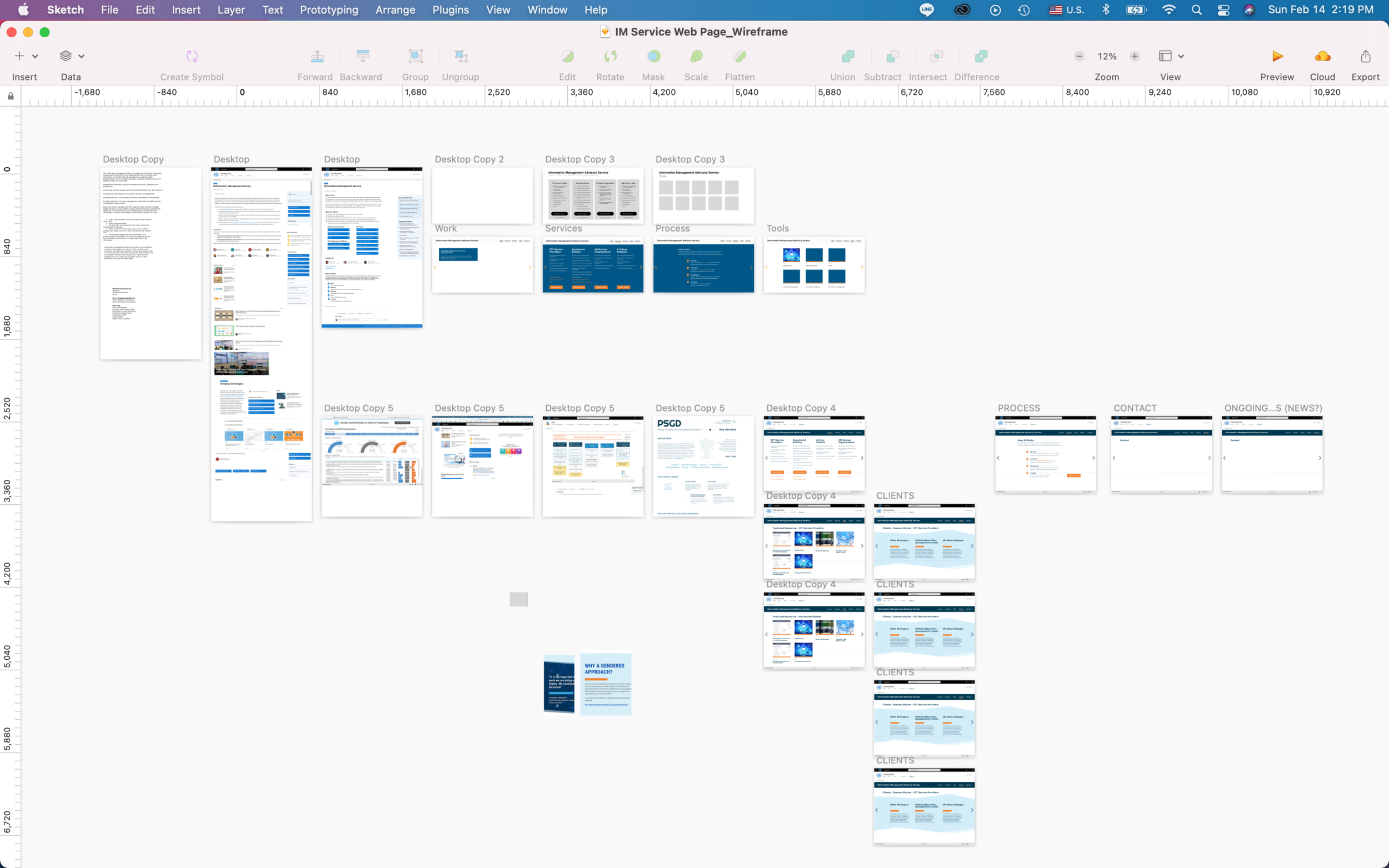
centralized
digital portal
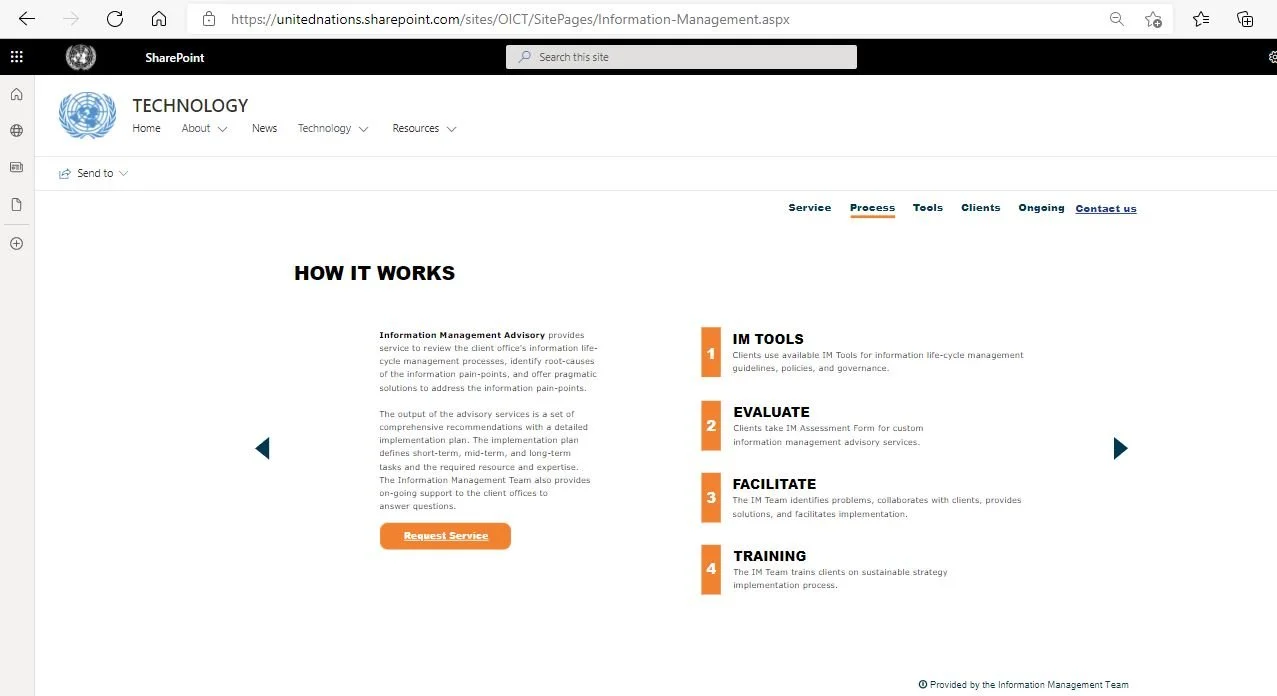
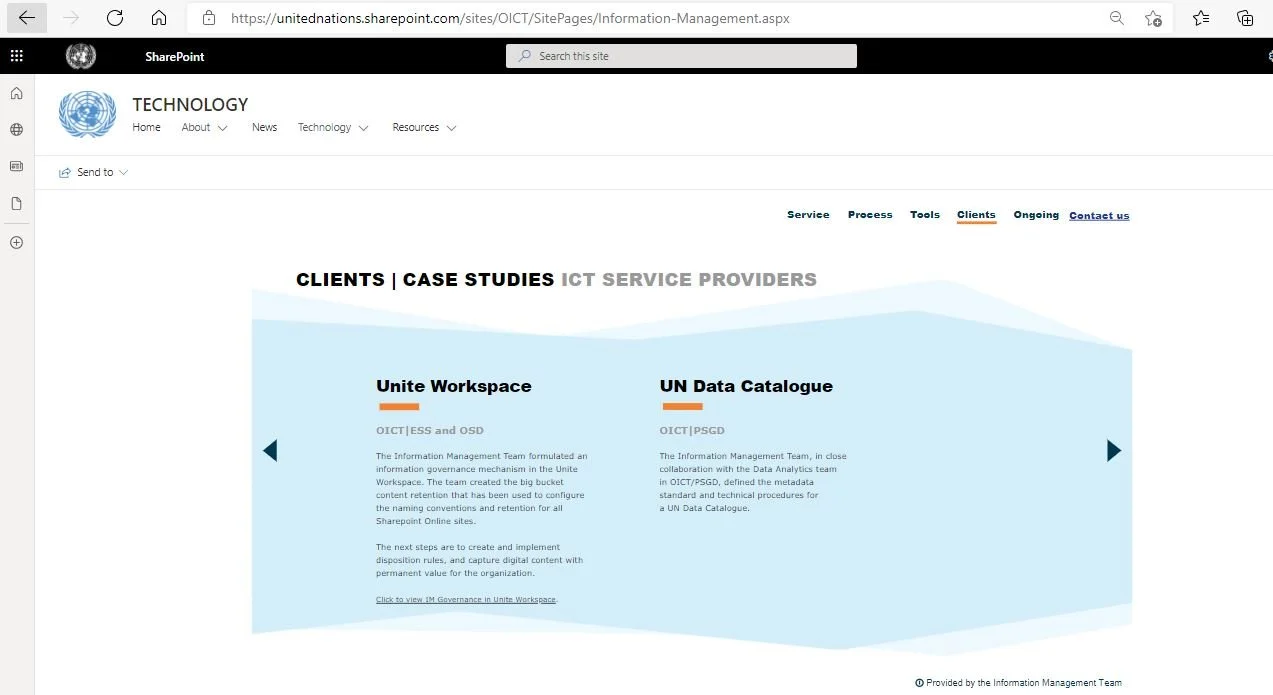
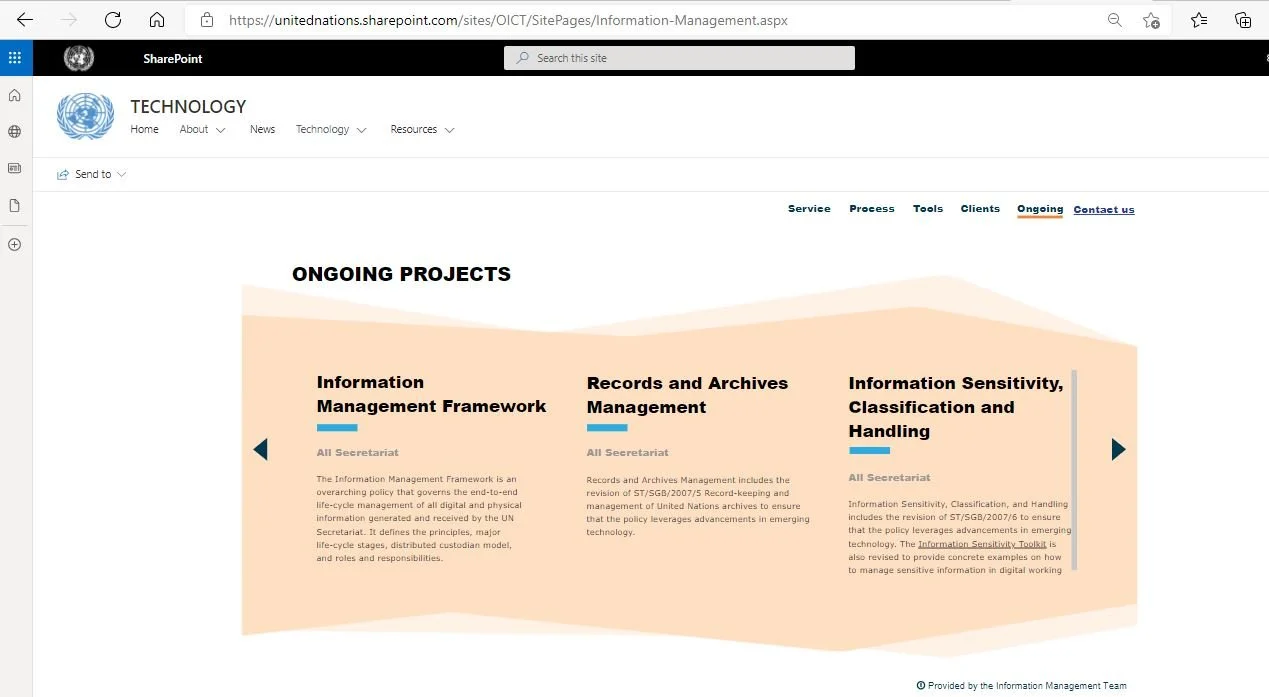
Finally, my manager asked me to use PowerBI to build the team's portal and web presence, hoping it would let us gather and generate data in the future. I learned the tool on the spot and built the centralized web portal, launched on the UN intranet, consolidating IMT's services, tools, active projects, and contact points into a single, cohesive hub. Each client group got a direct service-request path, giving the team a real channel to capture incoming requests and get credit for its work across the Secretariat.
“She examined my materials and suggested using the service blue-print method to design such a package. She successfully turned me from a doubter to a believer. She quickly mastered the PowerBI platform and the Portfolio has been embedded into our organizational intranet by now, available for all clients' access. Monica is a proactive and creative thinker... who has the great quality of working independently with minimal supervision.”
— Yujun Pian, Chief of Information Management & AI Governance Lead
Launched centralized IMT resources for global access, and evangelized the service blueprinting method at the UN All-Hands meeting.
reflection
Learned:
Navigating Skepticism with Frameworks: Entering a massive global organization like the UN requires building immediate credibility. When met with initial unfamiliarity regarding service design methodologies, I pre-filled institutional data into a structured blueprint framework. This shifted leadership from skepticism to full buy-in, ultimately scaling our collaborative efforts across departments.
Strategic Enterprise Consulting: I learned that effective service design in a large organization relies heavily on trust and resource-sharing. By establishing strong internal alignment with leadership early on, we created a model where department heads could confidently delegate data collection, turning a massive organizational silo into a shared roadmap.
Thinking Forward:
Granular Persona Trajectories: Moving forward, the goal is to map distinct, explicit pathways for various UN client groups. Because different departments have wildly varying technical needs, future iterations require walking through the ecosystem from each unique departmental vantage point.
Data-Driven Iteration: By leveraging PowerBI analytics, we can move past qualitative assumptions to monitor live client interaction, tracking search bottlenecks, drop-off rates, and feature utilization to dictate the next optimization sprint.
Ecosystem Discoverability: To maximize the platform's reach on the organizational intranet, a key focus is deeply embedding strategic keyword indexing. This ensures IMT’s services organically surface to global teams before they even realize they need a manual consultation.