

UNITED NATIONS: SERVICE VISIBILITY
Role: Service Blueprint · Information Architecture · UX Research · Portfolio Design
Timeline: 6 months
Team: Manager, Content Writer, Technologist
Organization: United Nations, Information Management Team
Impact: Service blueprint that aligned internal service narrative. Unified intranet portal for UN departments seeking IMT services.
The UN Information Management Team provides critical data consulting, tools, and resources for staff across the entire Secretariat. The challenge was a visibility crisis.
I was brought in to help solve this. Over six months, I navigated bureaucratic alignment to unify our internal service narrative and design a centralized portal. This ultimately brought everything into one place and changed how internal teams discover and leverage UN data assets.
research
When tasked with improving visibility, I started by understanding the current landscape of the IMT service from the client's perspective, before proposing any design solutions. I walked through the client journey across multiple different UN intranets, sat in on client consulting meetings, and held one-on-one meetings with my manager—asking questions like: Who are our clients? Which sites do people go through during the day? How do we make an impact?
The initial research results pointed to two main areas of friction:
Navigational Fragmentation: There was an unclear end-to-end user journey, lack of web presence, and no clear connection or entry points linking back to the team's page.
Operational Inconsistency: Resources and accomplishments were scattered and uncategorized, project naming was inconsistent, and service request processes were redundant.
SERVICE BLUEPRINT WORKSHOPS
To align the client journey and understand IMT’s service value holistically, I proposed using a service blueprint as an analysis method. I developed the initial framework by mapping known information, then led our cross-functional team onboard to collaboratively refine the end-to-end journey and align the full front- and back-end service flow.
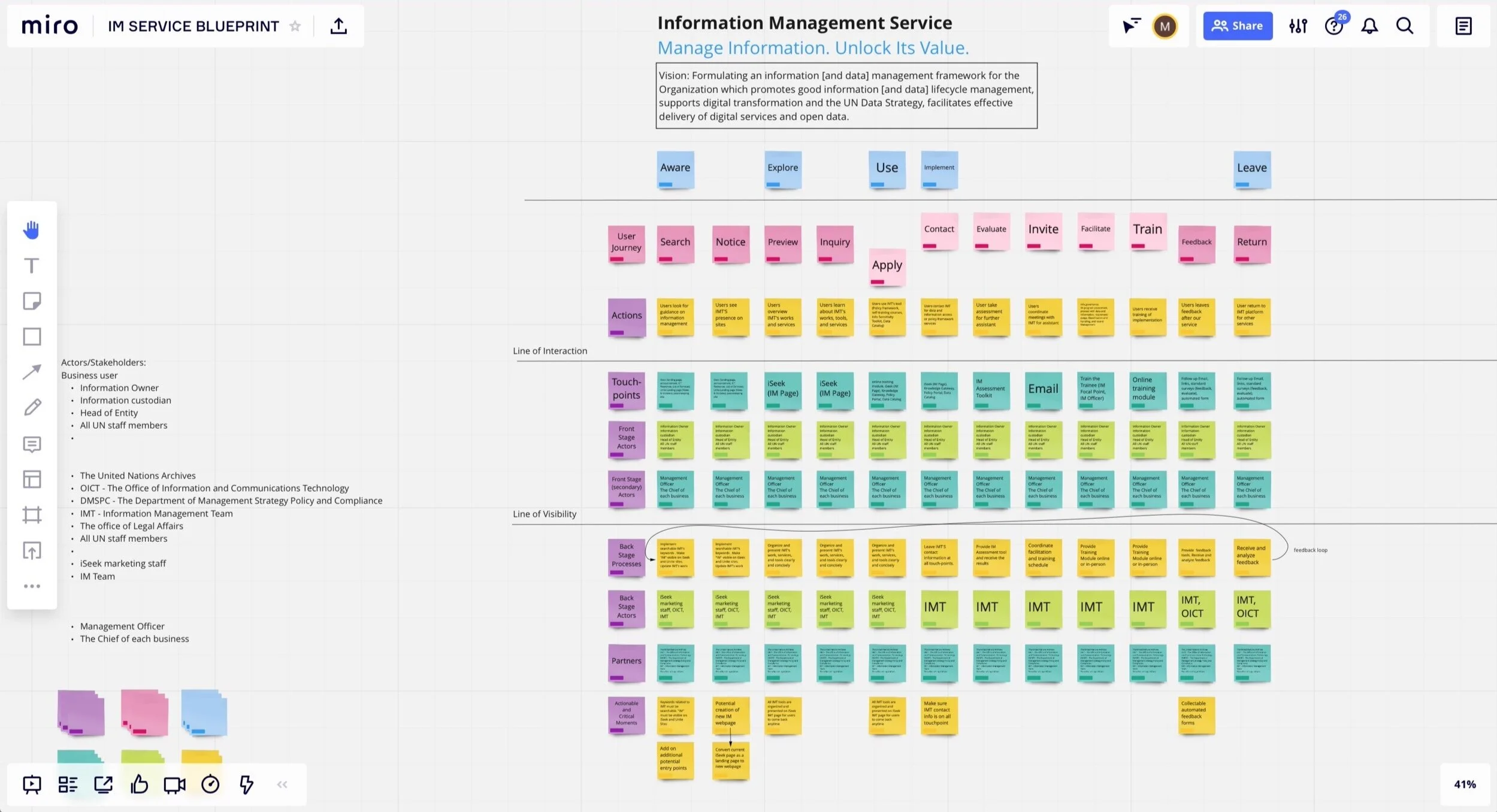
Workshops on Miro
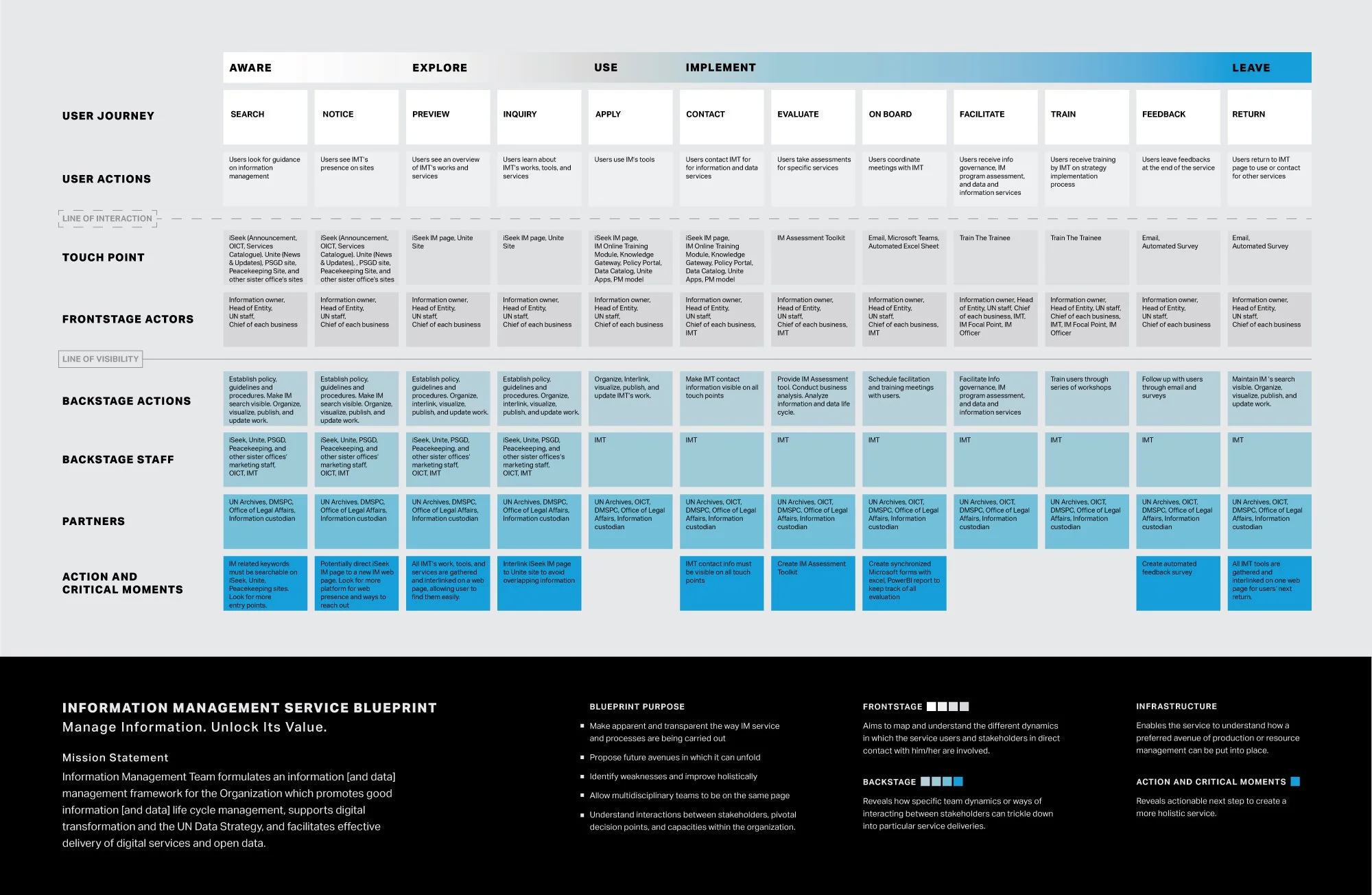
Final Service Blueprint
next stEP oPPORTUNITY
Finally, there is the refined service mission statement, client journey, and supporting processes. Three priority areas emerged:
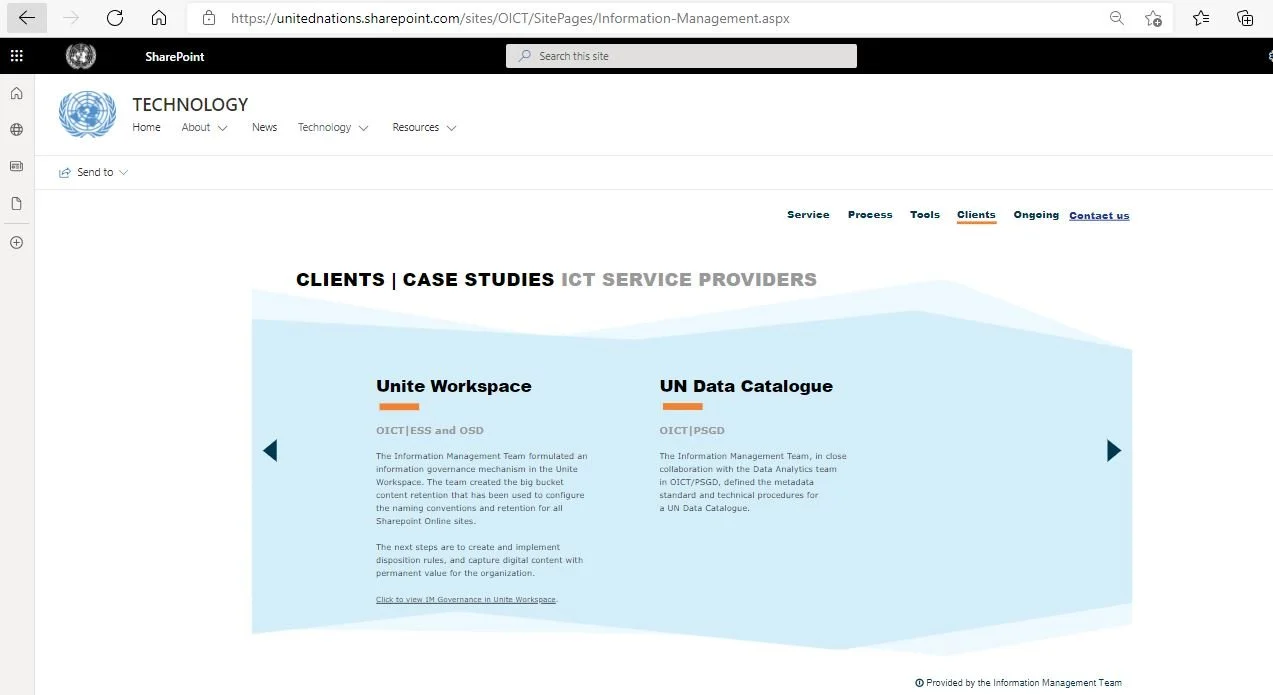
1. Manage products, services, and clients — gather and interlink all IMT work in one place, embed visible contact information across every touchpoint
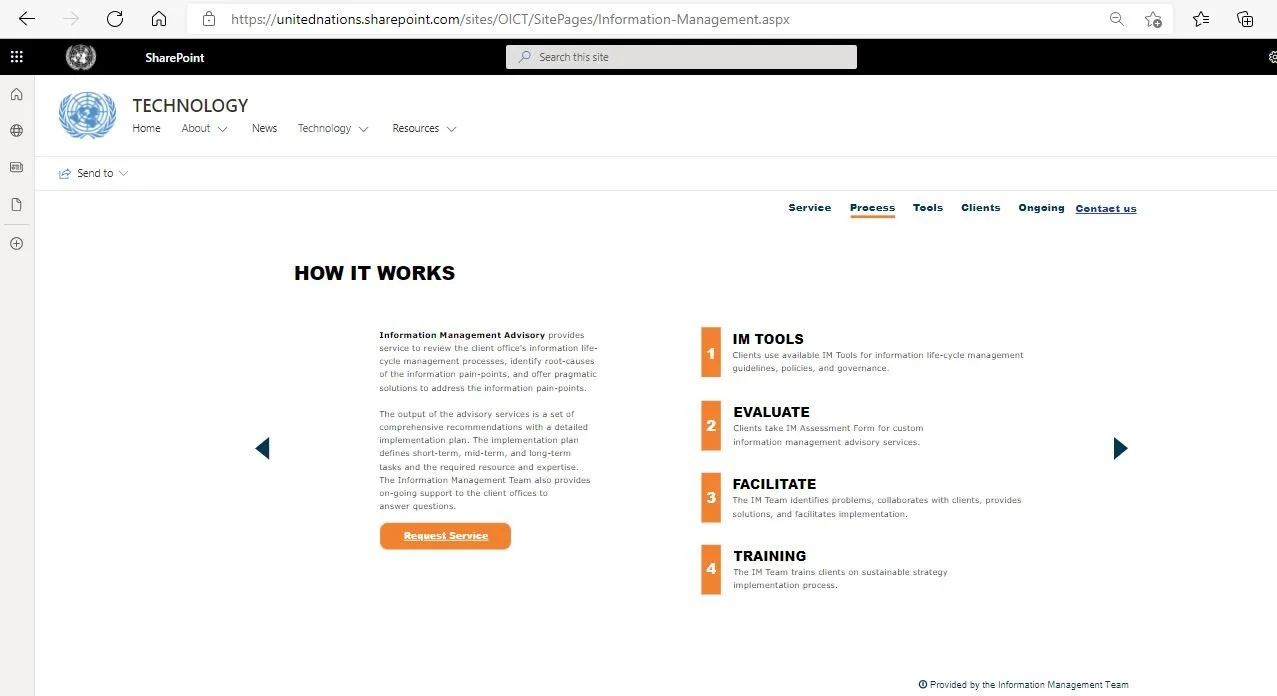
2. Improve service flow — streamline how clients request and receive consulting
3. Attract more clients — embed searchable keywords and more entry points across the organization's intranet
The solution
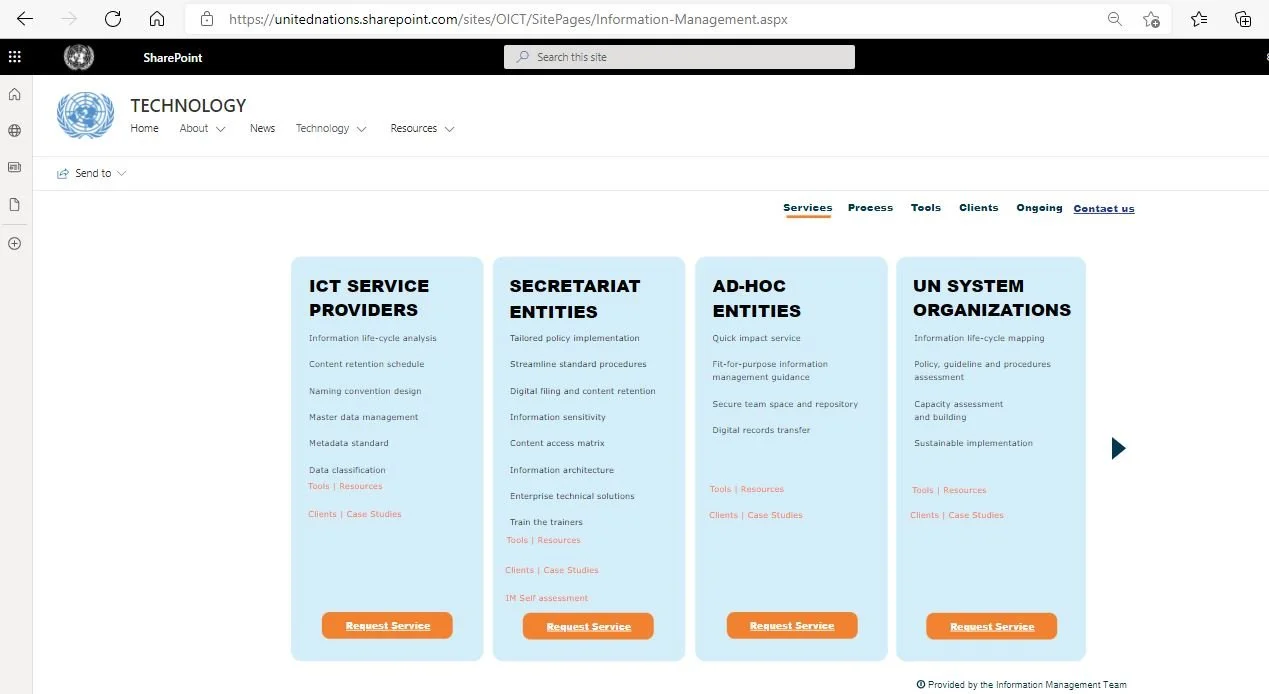
With the priorities clear, we aligned on building a service portfolio website — a single place where clients could find the team's services, tools, and resources, request consulting, and make contact. One entry point for everything.
DESIGN PRINCIPLEs
1. Clear communication of service offerings : Demystify and clearly articulate what the IMT team does. It ensures internal clients immediately understand our capabilities without having to decode complex organizational jargon.
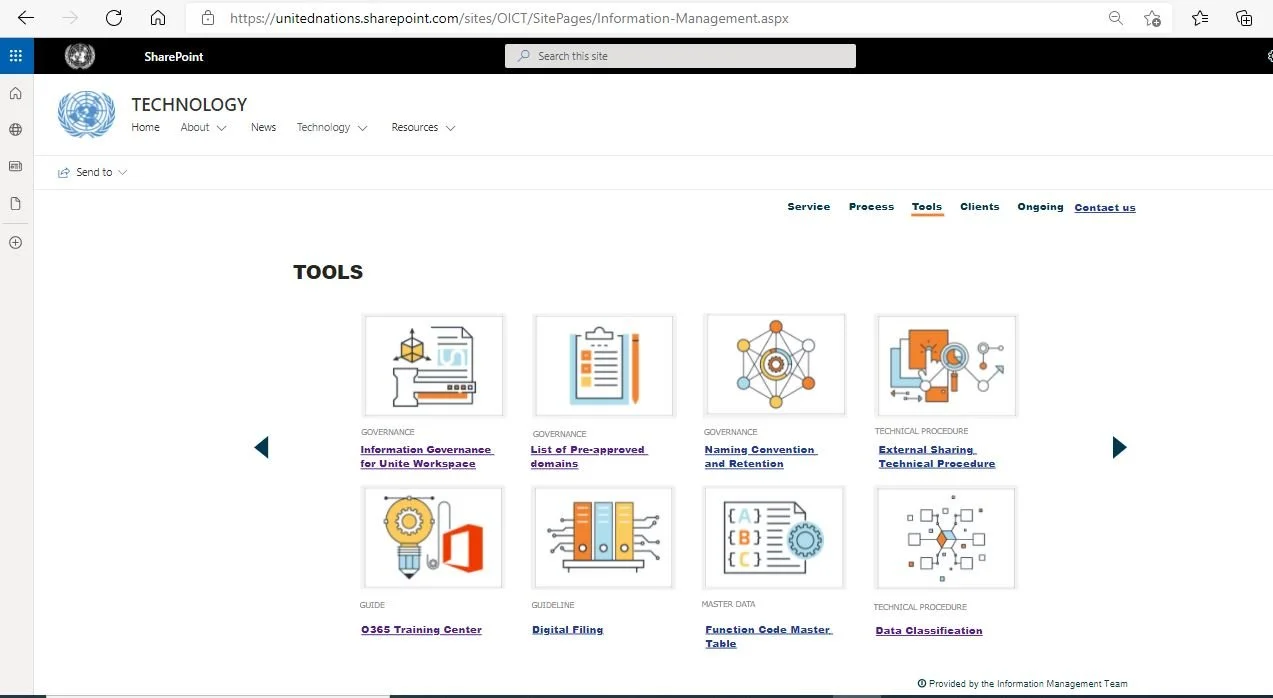
2. Effortless access to existing resources : Centralize all scattered tools and documents into a single, structured repository. This removes the friction of navigating multiple disjointed UN intranets just to find basic assets.
3. Seamless contact paths : Streamline the underlying mechanics for how clients request consulting. The interface should make initiating contact or submitting a service query an intuitive, one-click action from any page.
INFORMATION ARCHITECTURE
I designed the information architecture to directly address our foundational gaps: creating clear navigation, organizing scattered content, and building logical groupings that match how clients actually look for services.
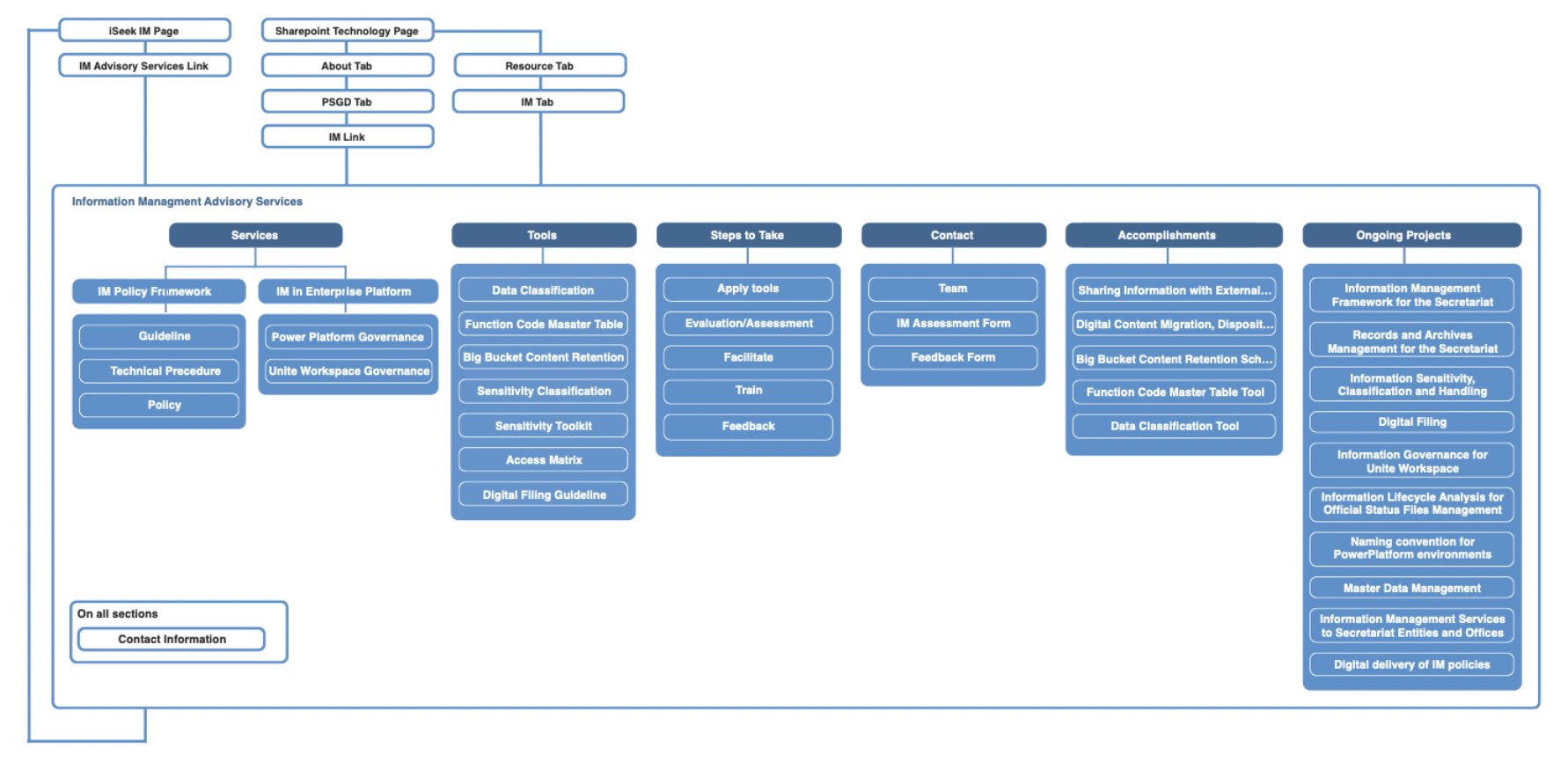
WIREFRAMES
Moving from the IA, I mapped out low-fidelity wireframes in Sketch to rapidly design the layout, content hierarchy, and interaction flow for each section of the portal.
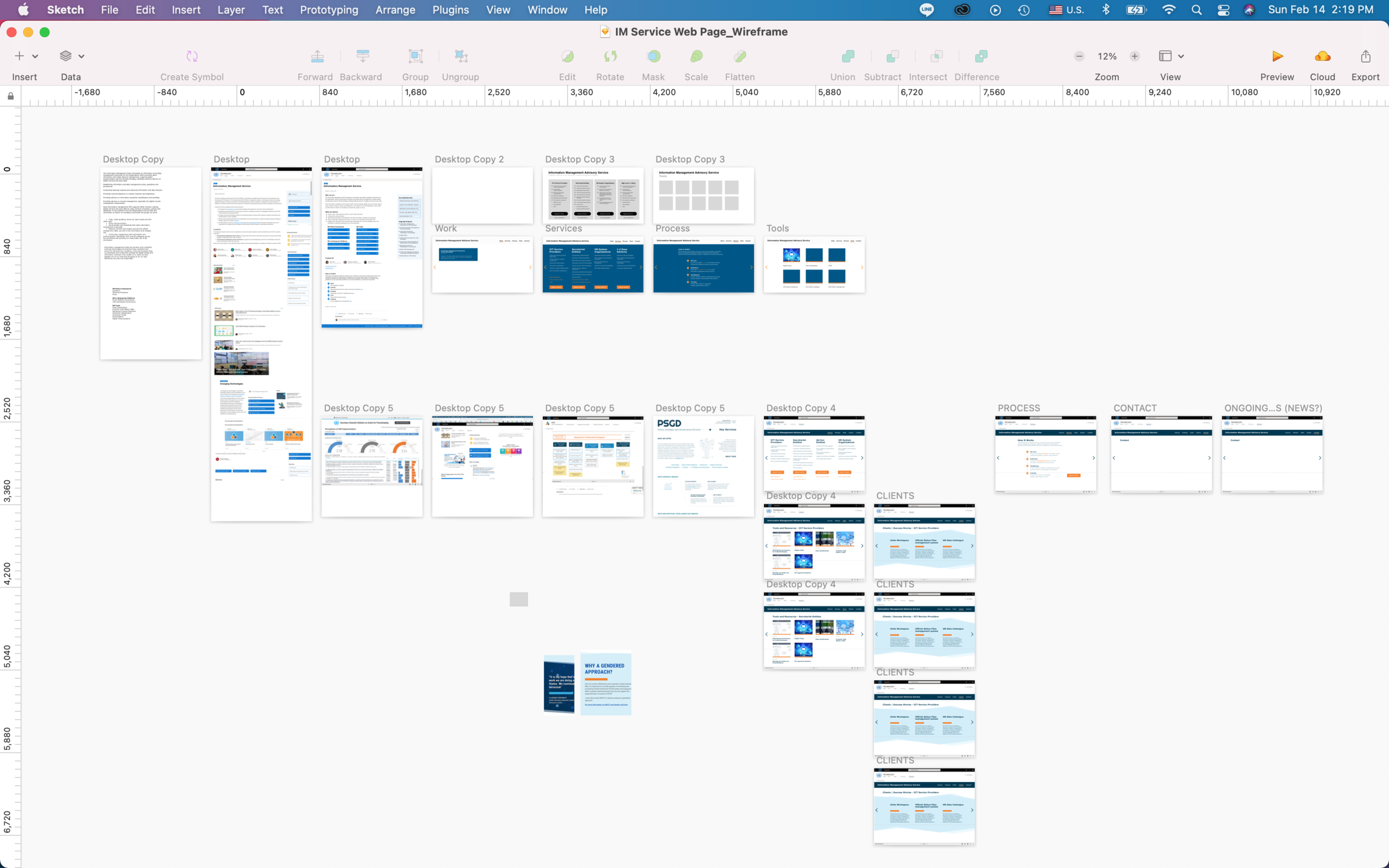
THE PORTAL
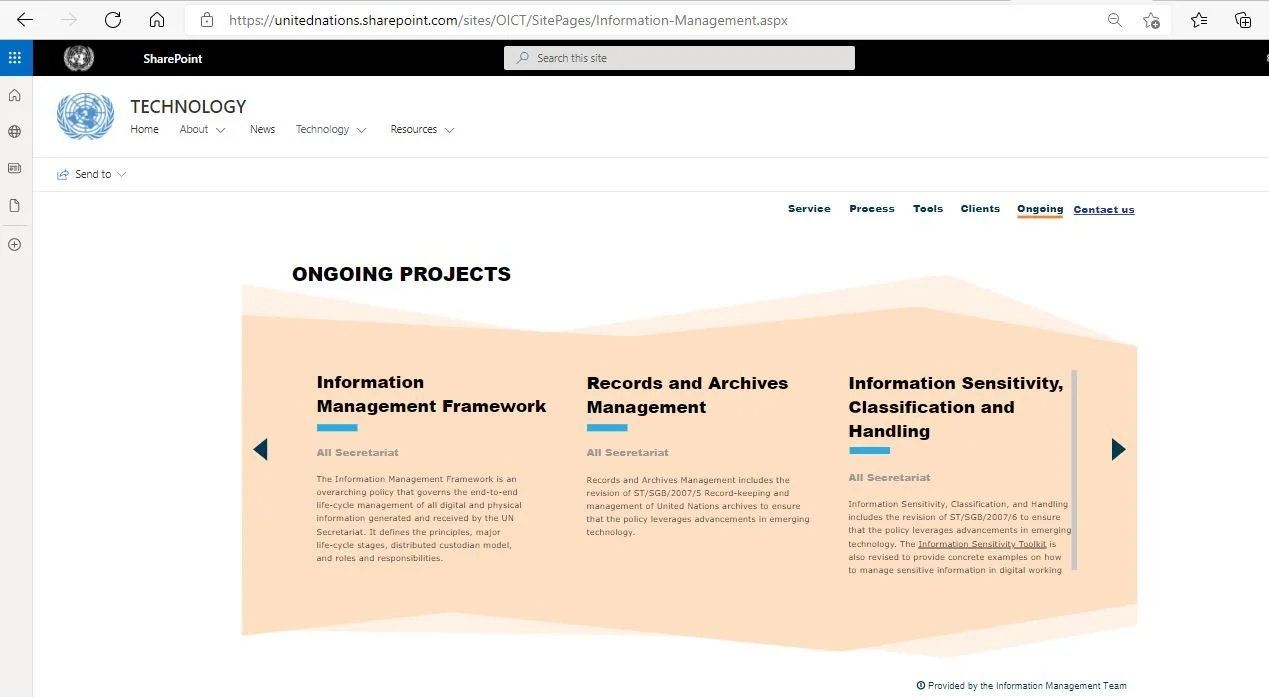
The final web experience launched successfully on the UN intranet. It consolidated all of IMT's services, tools, ongoing projects, and contact information into a single, cohesive hub—making the team fully visible and accessible to staff across the Secretariat. The core goal was to ensure people could easily find the team and its resources. Now, they can.
“She examined my materials and suggested using the service blue-print method to design such a package. She successfully turned me from a doubter to a believer. She quickly mastered the PowerBI platform and the Portfolio has been embedded into our organizational intranet by now, available for all clients' access. Monica is a proactive and creative thinker... who has the great quality of working independently with minimal supervision.”
— Yujun Pian, Chief of Information Management & AI Governance Lead
reflection
Learned:
Navigating Skepticism with Frameworks: Entering a massive global organization like the UN requires building immediate credibility. When met with initial unfamiliarity regarding service design methodologies, I pre-filled institutional data into a structured blueprint framework. This shifted leadership from skepticism to full buy-in, ultimately scaling our collaborative efforts across departments.
Strategic Enterprise Consulting: I learned that effective service design in a large organization relies heavily on trust and resource-sharing. By establishing strong internal alignment with leadership early on, we created a model where department heads could confidently delegate data collection, turning a massive organizational silo into a shared roadmap.
Thinking Forward:
Granular Persona Trajectories: Moving forward, the goal is to map distinct, explicit pathways for various UN client groups. Because different departments have wildly varying technical needs, future iterations require walking through the ecosystem from each unique departmental vantage point.
Data-Driven Iteration: By leveraging PowerBI analytics, we can move past qualitative assumptions to monitor live client interaction, tracking search bottlenecks, drop-off rates, and feature utilization to dictate the next optimization sprint.
Ecosystem Discoverability: To maximize the platform's reach on the organizational intranet, a key focus is deeply embedding strategic keyword indexing. This ensures IMT’s services organically surface to global teams before they even realize they need a manual consultation.